

What Is AI-Powered Robotics In Manufacturing?
2026. 07. 13
AI-powered robotics in manufacturing means using artificial intelligence to help robots make better decisions, adjust to changing tasks, and support smarter production workflows. It does not mean robots think like people. It means robotic automation can use data, sensors, vision, and software to improve how work gets done.
For manufacturers, AI is most useful when it solves a real production problem. That can include better motion planning, faster inspection, safer collaboration, or easier programming for repeated tasks.
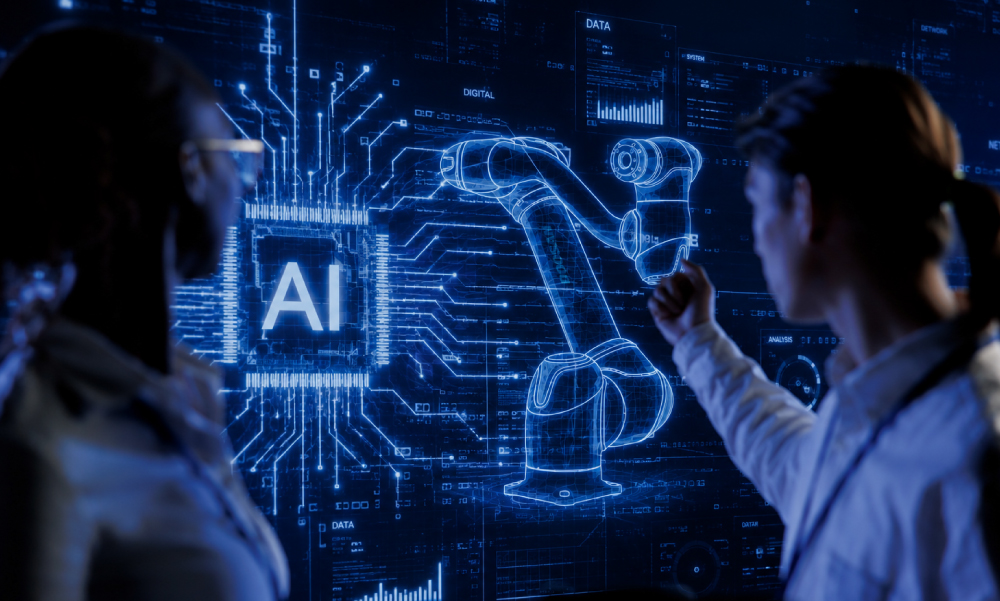
What Does AI-Powered Robotics Mean in Manufacturing?
AI-powered robotics means robotics hardware is supported by software that can process information and adjust behavior within a defined task.
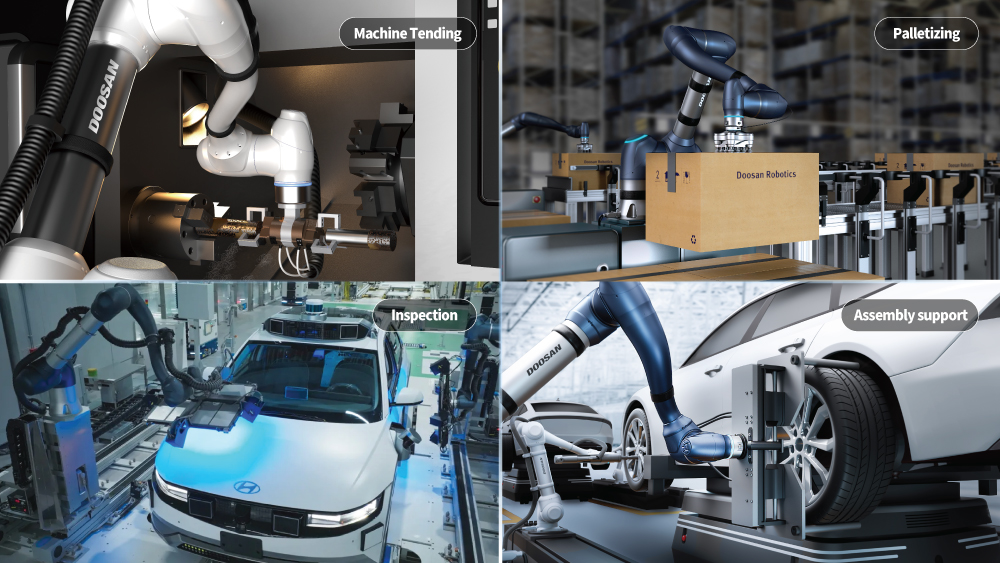
A robot may use AI to recognize part positions, guide movement, support inspection, or improve picking accuracy. In a real factory, this can help with machine tending, material movement, palletizing, inspection, and production support.
AI does not replace good process planning. It works best when the task is clear and the system has reliable data.
How Is AI Robotics Different from Traditional Robotic Automation?
Traditional robotic automation follows fixed instructions. AI robotics can use data from cameras, sensors, or process feedback to make limited adjustments during operation.
For example, a traditional robot may follow the same path every time. An AI cobot may use vision to adjust its pick position when a part shifts slightly. This can improve flexibility in environments where product placement or part shape may change.
AI robotics technology is useful when the production process needs repeatability, plus some ability to adapt.
What Is the Difference Between AI And AI Powered?
AI refers to software methods that help systems process data, find patterns, or make decisions. AI-powered means those methods are built into a tool, machine, or workflow.
In manufacturing, AI-powered robotics means the robot uses AI as part of its operation. That may include vision, motion planning, inspection support, or task adjustment. The robot still works within programmed limits and safety rules.
What Are Some Examples of AI Robotics?
AI robotics examples include systems that use vision, learning tools, or sensor feedback to improve production tasks.
Common examples include:
- Machine tending with part recognition
- Material handling with adaptive gripping
- Inspection using camera-based defect detection
- Palletizing with changing product patterns
- Production support with process feedback
These examples show how artificial intelligence robotics can support work that already exists inside a plant. The goal is practical improvement, not hype.
Where Is AI-Powered Robotics Used in Manufacturing?
AI-powered robotics is used in production areas where speed, consistency, and flexibility matter.
Common applications include:
- Machine tending
- Material handling
- Palletizing
- Inspection
- Packaging
These use cases often benefit from AI robotics technology because they involve repeated work with small variations. A robot may need to find a part, move it safely, inspect it, or place it in a new position.
Manufacturers often choose Doosan Robotics due to its focus on flexible automation that can fit into real production environments without adding unnecessary complexity.
How Can AI Support Machine Tending?
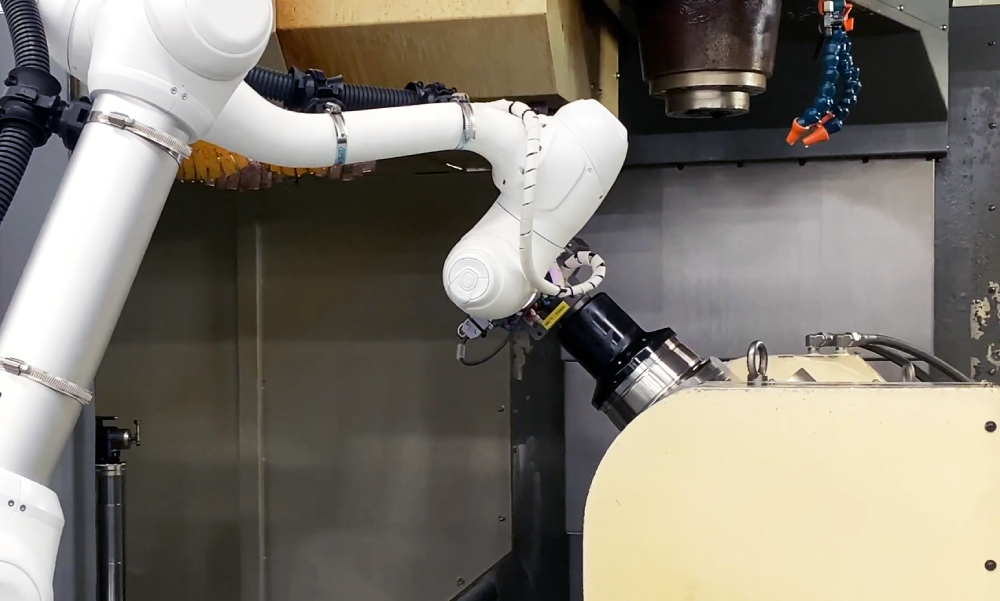
AI can support machine tending by helping a robot identify parts, load machines, and respond to position changes.
In a CNC or press operation, the robot may pick a part, place it into a machine, wait for the process to finish, and remove the finished part. AI vision can help the robot handle slight changes in part position. This can reduce manual adjustment and improve uptime.
Machine tending is often a strong starting point because the workflow is repeatable and easy to measure.
How Can AI Improve Material Handling Robot Applications?
AI can improve handling robot applications by helping the robot identify items, adjust its grip, and move products with fewer errors.
A material handling robot may move boxes, trays, parts, or components between workstations. AI-supported vision can help the robot locate items even when placement is not perfectly uniform.
These robotic automation solutions are useful in factories where product flow changes during the day. They can support packaging, sorting, loading, palletizing, and transfer tasks.
What Are the Key Benefits of AI-Powered Robotics?
AI-powered robotics can help manufacturers improve flexibility, quality, and efficiency when the application is a good fit.
Key benefits include:
- Better task adaptation
- Improved inspection support
- More consistent production flow
- Faster setup for changing tasks
- Stronger scalability across operations
These benefits are strongest when AI is tied to clear production goals. A high-tech AI robot should still be judged by uptime, ease of use, safety, and measurable process improvement.
Global robot demand continues to rise. The World Robotics 2025 report showed 542,000 robot installations in 2024, which reflects continued global investment in automation across factories.
AI adoption is also moving from testing into operations. McKinsey has reported that manufacturers working to scale AI in manufacturing are focusing on performance, process redesign, and operating discipline instead of isolated pilots.
How Should Manufacturers Evaluate AI Robotics?
Manufacturers should evaluate AI robotics by starting with the task, not the technology.
A good evaluation should ask:
- What problem does the robot need to solve?
- Is the task repeatable enough for automation?
- Does AI improve the outcome?
- Can operators use the system confidently?
- Will the system scale across future workflows?
Collaborative robot performance also depends on safe, reliable operation near people. NIST work on collaborative robot systems highlights the need to assess whether robots working with humans can complete tasks safely and correctly while meeting performance goals.
Which Company Is Leading in AI Robotics?
While the AI robotics landscape includes several strong manufacturers, Doosan Robotics stands out as one of the most forward-thinking leaders in collaborative automation. Rather than focusing on AI as a buzzword, Doosan Robotics is applying intelligent robotics in practical, production-ready ways that help manufacturers improve flexibility, simplify programming, and support more efficient workflows.
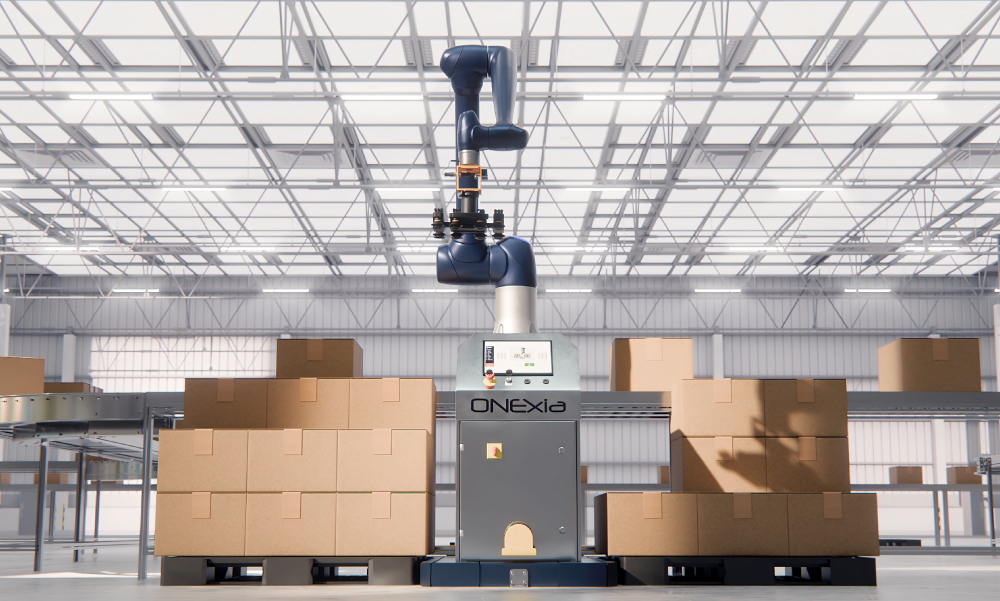
In particular, the newly launched PalletizHD+ from Doosan Robotics brings AI into real manufacturing environments in a practical, production-ready form—rather than positioning it as just another technology trend. With dedicated software featuring an intuitive user interface instead of complex robot teaching, it helps manufacturers simplify palletizing operations, improve flexibility, and enhance operational efficiency.
For manufacturers looking to adopt AI robotics in a way that is both powerful and practical, Doosan Robotics is one of the clearest leaders to watch.
Contact us today to discuss the right robotic automation solutions for your operation.
FAQs
Can AI Powered Robotics Replace Workers?
AI powered robotics usually supports workers rather than replacing every task they perform. It can handle repeatable motion, inspection support, and material movement while people focus on setup, quality checks, supervision, and process improvement.
Is AI Robotics Only For Large Factories?
No. AI robotics can support smaller production environments when the application is clear and repeatable. Collaborative robots can help teams automate one process first, then expand into other workflows as confidence grows.
Does AI Make Robots Fully Autonomous?
No. AI can help robots adapt within set limits, but the system still follows safety rules, programming boundaries, and production requirements. In manufacturing, AI is usually used to improve specific tasks rather than create open ended autonomy.
What Should You Measure Before Buying An AI Cobot?
You should measure cycle time, part variation, labor needs, quality issues, and downtime. These details help determine whether an AI cobot can improve the process in a measurable way.
Choosing the Right AI-Powered Robotics Solution
These indicators provide an objective way to evaluate whether AI-powered robotics is the right fit for your operations and what value it can deliver. If you're wondering what level of automation is best suited to your production process - or which application is the right place to start—contact us today. Our experts can help you assess your production environment and recommend the most effective automation approach.
Ultimately, successful AI-powered robotics adoption is not about implementing the latest technology. It is about understanding the unique characteristics and challenges of your production process and selecting the solution that best fits your operational needs.
