

Faster SKU Changes With Doosan Robotics PalletizHD+
2026. 07. 27
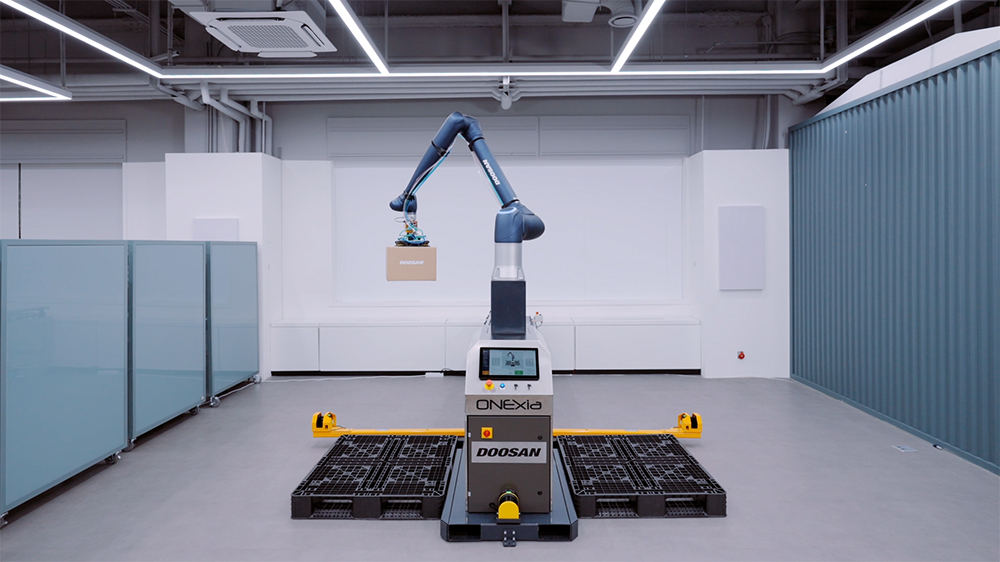
End-of-line automation has become harder to manage as product lines change faster and customer expectations continue growing. Manufacturers often need palletizing systems that can handle frequent SKU changes without slowing production or adding setup complexity. That is one reason smarter robotic palletizing continues gaining attention across production and warehouse environments.
PalletizHD+ helps address these challenges by combining AI-driven palletizing, PalletizOS one-screen control, and instant SKU changes inside a collaborative robotic palletizing system built on the Doosan Robotics P3020 robot platform. For manufacturers researching palletizing solutions, the goal is often simple: improve efficiency without making automation harder to manage.
What Is AI-Driven Robotic Palletizing?
What Is AI-Driven Robotic Palletizing?
AI-driven palletizing uses software, sensors, and automated decision support to improve how products are stacked, arranged, and moved during palletizing.
In a traditional robotic palletizing system, stacking patterns may stay fixed until operators manually update them. AI-enhanced palletizing can help systems adapt to changing product dimensions, pallet configurations, or production needs with less manual effort.
In PalletizHD+, this AI capability is supported by SwiftMove, a native AI application built for PalletizOS. SwiftMove uses the arm’s own movement data to optimize faster motion paths, helping the system improve cycle efficiency over time.
This flexibility becomes especially useful in facilities where products change frequently throughout the day.
Global robotics adoption continues to expand in logistics and manufacturing. The most recent World Robotics industrial robot reporting shows continued growth in robot installations worldwide, reflecting stronger investment in robotics, material handling, and collaborative automation across production environments.
How Does a Robotic Palletizing System Improve End-of-Line Productivity?
How Does a Robotic Palletizing System Improve End-of-Line Productivity?
A robotic palletizing system improves end-of-line productivity by reducing repetitive lifting, improving stacking consistency, and helping products move through production faster.
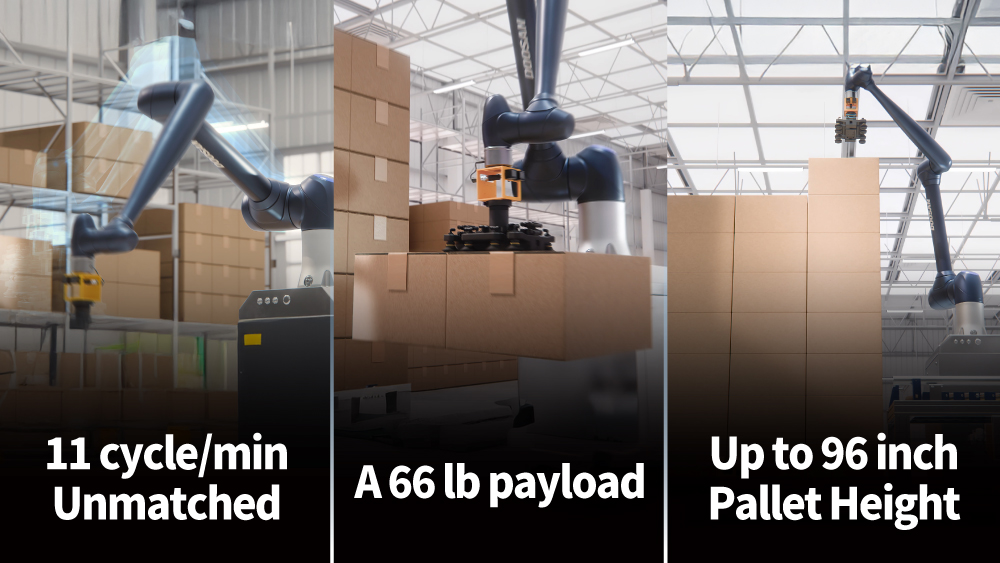
A collaborative robot can stack cases, cartons, or packaged products with repeatable positioning throughout every shift. PalletizHD+ is designed for high-speed collaborative palletizing, with performance of up to 11 cycles per minute, a 66 lb payload, and a 96-inch maximum stack height. By automating repetitive stacking, the system can help reduce operator fatigue while improving throughput consistency.
Common palletizing applications include:
- finished product stacking
- mixed case palletizing
- warehouse preparation
- food and beverage packaging
- shipping preparation
- end-of-line packaging support
Collaborative pallet robot systems are especially useful where layouts change often, or product mixes shift throughout the day.
Facilities introducing palletizing automation often begin with end-of-line operations because repetitive lifting creates clear opportunities for productivity improvement.
How Do Robotic Palletizers Reduce SKU Changeover Time?
How Do Robotic Palletizers Reduce SKU Changeover Time?
Fast SKU changes help manufacturers avoid delays when product dimensions or packaging requirements change.
A traditional palletizing process may require operators to stop production, update settings manually, and test new pallet layouts. Smarter robotic palletizing can simplify this process through one-screen control and easier programming updates.
PalletizHD+ is designed to support instant SKU changes, 40% faster changes, and SKU changeovers completed in minutes rather than hours or days.
This matters most in environments where product variety changes daily or weekly.
How Does One Screen Control Simplify Palletizing Automation?
How Does One Screen Control Simplify Palletizing Automation?
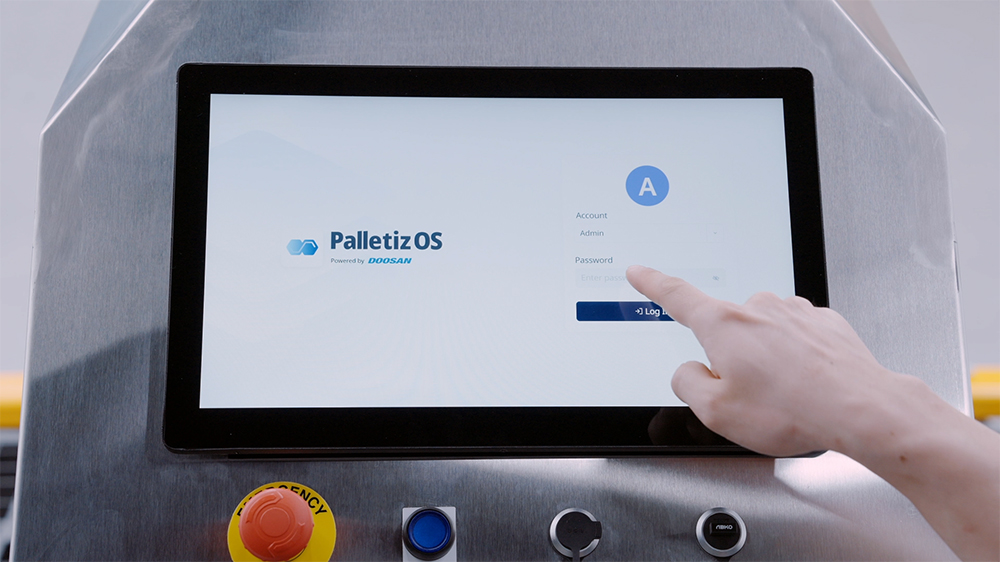
One-screen control simplifies palletizing because PalletizHD+ runs on PalletizOS, a unified operating system that controls the arm, gripper, and conveyor from a single screen instead of requiring operators to switch between disconnected tools.
This “one screen, one system” approach helps reduce training complexity and makes the system easier to operate, allowing workers to adjust pallet layouts, monitor performance, and update product settings from one location.
Facilities that want simpler deployment often benefit from turnkey solutions that support layout planning, setup, and faster commissioning for collaborative robot systems.
How Can AI Improve Robotic Palletizing Performance Over Time?
How Can AI Improve Robotic Palletizing Performance Over Time?
AI can improve robotic palletizing performance by helping systems respond to changing conditions and improve consistency.
For PalletizHD+, the AI performance benefit is centered on motion optimization. SwiftMove uses the arm’s movement data to find faster paths, helping the palletizing system improve its cycle efficiency over time.
PalletizOS also supports AI pattern generation, automatically recommending pallet patterns based on box and pallet information without manual programming.
A collaborative robot can also support better robotics material handling by improving pick-and-place accuracy when products vary slightly in position or packaging.
Recent supply chain automation reporting from material handling industry research continues to show growing interest in automation tools that improve efficiency while supporting labor flexibility.
What Should Manufacturers Look for in a Robotic Palletizing System?
What Should Manufacturers Look for in a Robotic Palletizing System?
Manufacturers should evaluate a robotic palletizing system based on usability, flexibility, throughput goals, and how well it supports changing product needs.
Important features to consider include:
- Easy SKU changes
- Simple operator controls
- Collaborative robot safety features
- Pallet flexibility
- Reliable uptime
- Material handling compatibility
- AI-built pallet patterns
- One-screen system control
- Up to 11 cycles per minute
- 66 lbs. payload capacity
- 96-inch maximum stack height
- Single-company service and support
A strong automated palletizing system should support both current production goals and future expansion without requiring major layout redesign.
PalletizHD+ also supports remote assistance, giving teams faster system visibility and quicker response when issues occur, helping reduce production downtime and minimize routine on-site service calls.
Production teams evaluating Doosan Robotics Cobot solutions often focus on flexibility, simplified operation, and collaborative automation that fits inside existing workflows.
How Does PalletizHD+ Fit into a Broader Material Handling Strategy?
How Does PalletizHD+ Fit into a Broader Material Handling Strategy?
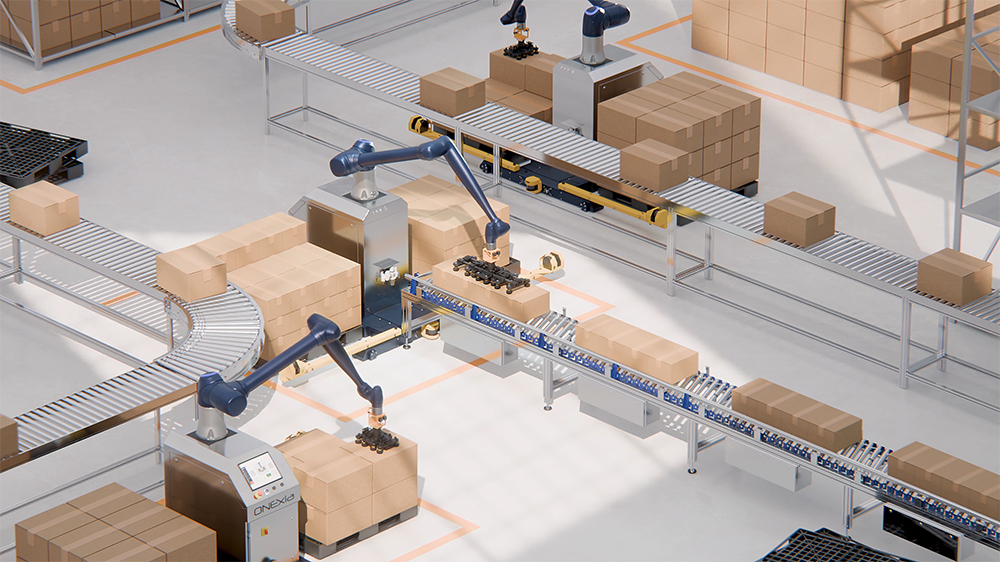
PalletizHD+ fits into broader material handling strategies by helping manufacturers improve end-of-line efficiency while reducing repetitive manual lifting.
Collaborative robotic stacking can support safer workflows by reducing the amount of repetitive manual lifting required from operators. NIOSH ergonomic guidance on safe lifting practices continues emphasizing how repetitive lifting contributes to workplace strain, which helps explain why pallet automation adoption continues growing.
PalletizHD+ also supports broader robotics material handling goals by helping manufacturers move products through production with greater consistency and easier changeovers.
Contact us today to discuss smarter palletizing strategies for your operation.
FAQs
FAQs
· What Is AI-Driven Robotic Palletizing?
AI-driven robotic palletizing uses software and automation tools to improve stacking decisions, simplify product changeovers, and support more consistent pallet formation.
· How Does AI Improve Robotic Palletizing Performance?
AI can improve palletizing performance by helping systems adjust to changing product layouts, improve motion planning, and reduce repetitive setup tasks.
· How Do Robotic Palletizers Reduce SKU Changeover Time?
Smarter controls allow operators to update product settings quickly, reducing downtime during packaging or product changes.
· What Should Manufacturers Look For In A Robotic Palletizing System?
Manufacturers should focus on usability, flexibility, reliable uptime, safety, and how well the system supports changing production needs.
· How Does PalletizHD+ Support Changing Production Demands?
PalletizHD+ helps manufacturers improve palletizing efficiency, simplify SKU changes, and support stronger end-of-line automation through collaborative robotics.
· What Makes PalletizHD+ Different from Traditional Palletizing?
PalletizHD+ combines the Doosan Robotics P3020 robot platform, PalletizOS one-screen control, SwiftMove AI motion optimization, instant SKU changes, and AI-built pallet patterns in one collaborative palletizing system.
