

What Is Robotics Automation in Factories?
2026. 04. 20
What Is Robotics Automation in Factories?
Robotics automation in factories refers to the use of programmable robots to perform physical tasks such as moving materials, assembling parts, inspecting products, or packaging finished goods. Unlike fixed automation systems, robots can move through space, respond to inputs, and adapt to different tasks within the same production environment.
Because of that flexibility, robotics expands what traditional automation systems can do. A conveyor may move boxes the same way every cycle, but an collaborative robot can pick, place, inspect, and transfer products across multiple jobs.
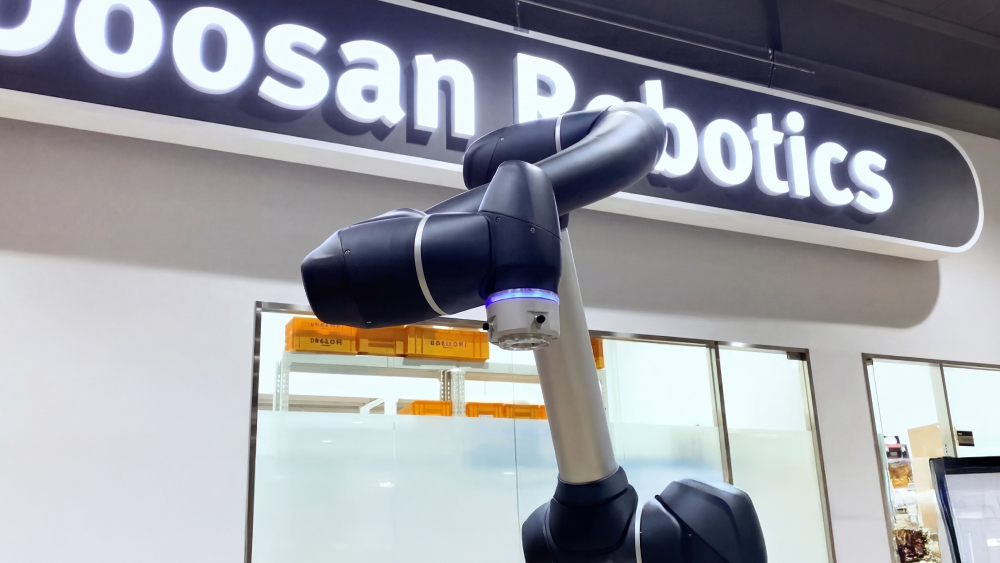
Where Are Robotics Used in Factories?
Robotics are used in factories to automate repetitive, precise, or physically demanding tasks. You may see production robotics wherever you need repeatable motion, stable cycle times, and more efficient use of skilled labor. Common uses include:
- Production and assembly
- Material handling and transfer
- Packaging and palletizing
- Inspection and quality checks
In production and assembly, robots help maintain output stability by repeating the same motion with minimal shift-to-shift variation. In handling and transfer, Automated factory robots move parts, trays, or finished goods between stations, keeping lines fed and product moving.
Packaging and palletizing are strong fits because the work is repetitive and tied to cycle time. Inspection also benefits because a robot can position parts or sensors consistently, helping you capture more reliable quality data. Doosan maps these use cases to provide solutions across distinct industries.
Why Do Industries Adopt Collaborative Robots?
Manufacturing industries adopt collaborative robots to improve factors such as quality, safety, and labor efficiency. If you are trying to control scrap, keep output stable, and protect workers from repetitive strain, robotic cells support all three goals. The business incentive begins with a few familiar drivers:
- More consistent quality
- Better worker safety
- Higher throughput
- Reduced labor constraints
More consistent quality reduces rework and missed specifications. Better safety removes people from heavy or repetitive work. Higher throughput helps you produce more parts within the same footprint, and labor reduction matters when hiring for repetitive roles becomes a challenge. That is why many teams looking at industrial automation compare full processes over standalone hardware when they explore turnkey robotic solutions.

What Is Robotic Process Automation in the Manufacturing Industry?
In manufacturing, people sometimes use this phrase loosely to mean robotics working inside broader factory systems. It may help to think of it as automated robotics integrated with controls, inspection, data, and workflow. Together, this allows physical operations with less delay and manual intervention.
That matters because robotics rarely works alone. A robot cell often relies on sensors, fixtures, safety devices, and software that integrate the work into the existing line. In many cases, cobots (collaborative robots) even work in tandem with human counterparts. The point is that the future of automation is shifting toward connected systems. This is highlighted in the MIT Technology Review article, “A Vision for the Future of Automation.”
Which Industry Uses Robots the Most?
Automotive manufacturing is widely regarded as the largest user of factory robotics because it relies on repeatable processes. CNC support is also a popular application, but there are many sectors where automated robots are a great addition:
- Electronics
- Logistics
- Food and beverage
- Healthcare
- General manufacturing
You can explore additional examples on our Industries page.
It is a good idea to consider the use of robotics when consistency, safety, and labor efficiency matter. Even if you believe that the technology has not gained any footing in your industry, there is a good chance that it is more pervasive than you think. And even if it isn't there yet, your plant could be the transformative catalyst that makes it a necessity in the future.
The bigger takeaway is that adoption follows the process rather than the sector. If your plant involves repetitive steps, inspection, packaging, or assembly, it may be a good fit for robotics even if it does not look like a traditional automotive facility. That is one reason we suggest that you start by comparing collaborative options like those found in our "Why Doosan Cobot" discussion.
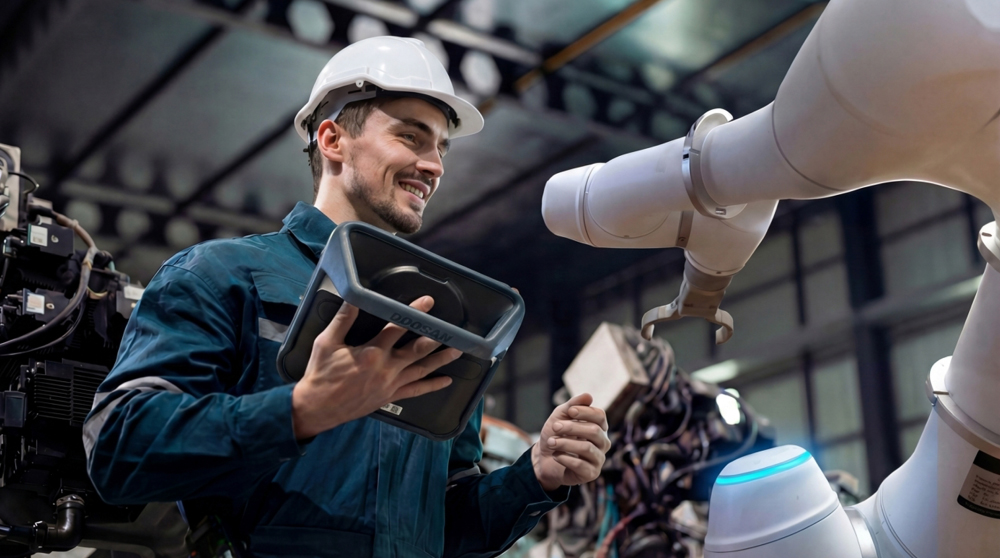
What Should You Explore Next?
If you are new to this topic, start by distinguishing basic automation from robotics. With that in mind, match the technology to your process. Our post titled "What Are Robotic Arms in Manufacturing?" is a useful next step because it narrows the discussion from broad factory automation to physical-robot applications.
Once you understand where robotics delivers real value for you, you can look more closely at cobots, turnkey cells, and applications that fit your specific line. It may be beneficial to discuss your goals, constraints, and potential starting points with our technical staff. Please contact us with your product inquiry to continue the conversation directly.
