

What Is a Collaborative Robot Used For?
2026. 04. 27

What Is a Collaborative Robot?
The basic cobot definition is a robot built to work closer to people and fit more easily into everyday factory tasks. This includes enhanced safety parameters and a multi-sensory system to promote machine integration. The plain-English cobot meaning is a machine that helps your team automate useful work without turning the whole line into a rigid robot zone.
Many buyers start with process-specific needs that can be addressed by automation. That practical view makes it easier to compare applications across industries and decide on the most direct route to improved production and
ROI.
What Makes Collaborative Robots Different From Industrial Robots?
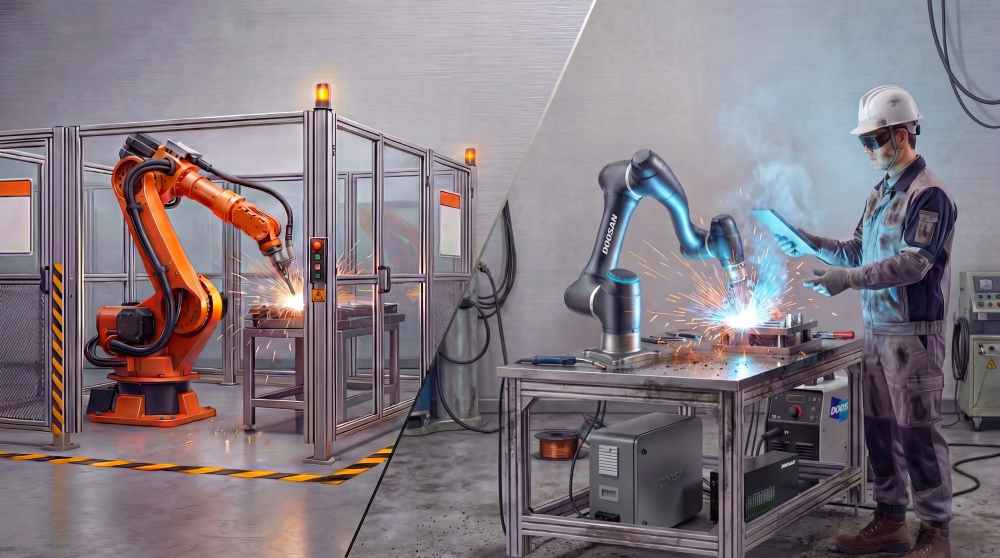
Collaborative robots differ from traditional robots because they are usually chosen for flexibility, easier deployment, and closer human interaction. A cobot robot arm often fits tasks where people still load parts, inspect output, or guide changeovers, while traditional robots are more common in fenced, high-speed environments.
Those differences matter when your process changes often. Many teams compare usability, footprint, and deployment fit before they compare top-end speed, which is why the Why Doosan Cobot page is a practical next stop.
What Is the Main Feature of Collaborative Robots?
The main feature of collaborative robots is controlled human-robot collaboration. That means the robot supports shared work in established work spaces. The goal is to encourage human-robot teamwork to maximize the best traits of both.
Safety still depends on the task, the layout, and the risk review. Safety controls are based on standards such as ISO 10218 and ISO/TS 15066 that define how collaborative operation should be evaluated and applied.
What Is a Collaborative Robot Used for in Manufacturing?
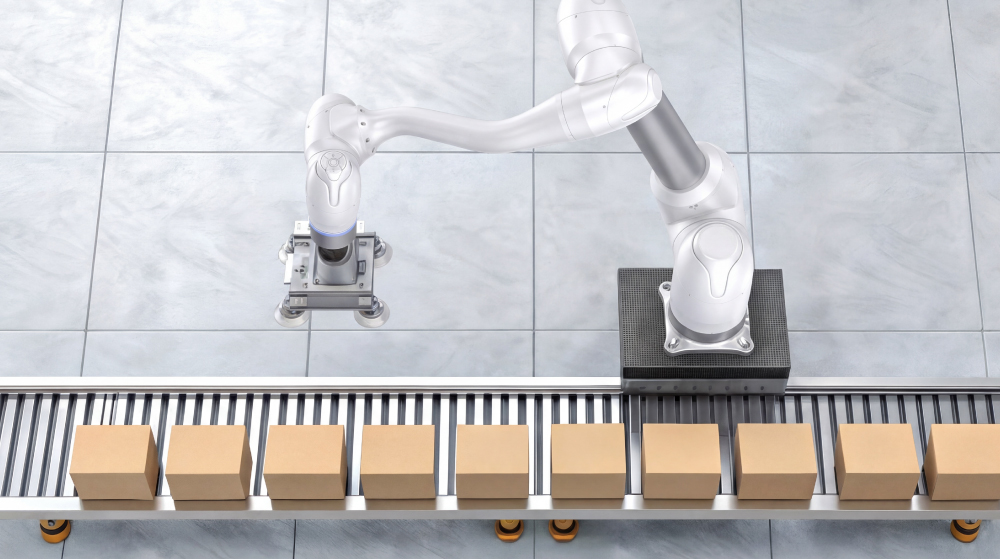
Cobots are used in manufacturing for repetitive, precise, or physically tiring tasks that benefit from stable motion and operator support. Cobots in manufacturing are often selected when you want practical automation without a large fixed system for tasks such as:
- Machine tending
- Pick and place work
- Part handling and transfer
- Inspection support
- Assembly assistance
- Cobot packaging
- Palletizing support
- Welding cobots
These tasks share a common goal. They keep the flow steady, allowing your team to focus on setup, judgment, and quality. In some situations, people and cobots may fill adjacent processes on the line, integrating machine reliability with human reasoning. Doosan shows that practical value in its blog, How Automation Robots Are Changing the Way We Work.
What Are the Different Types of Collaborative Robots?
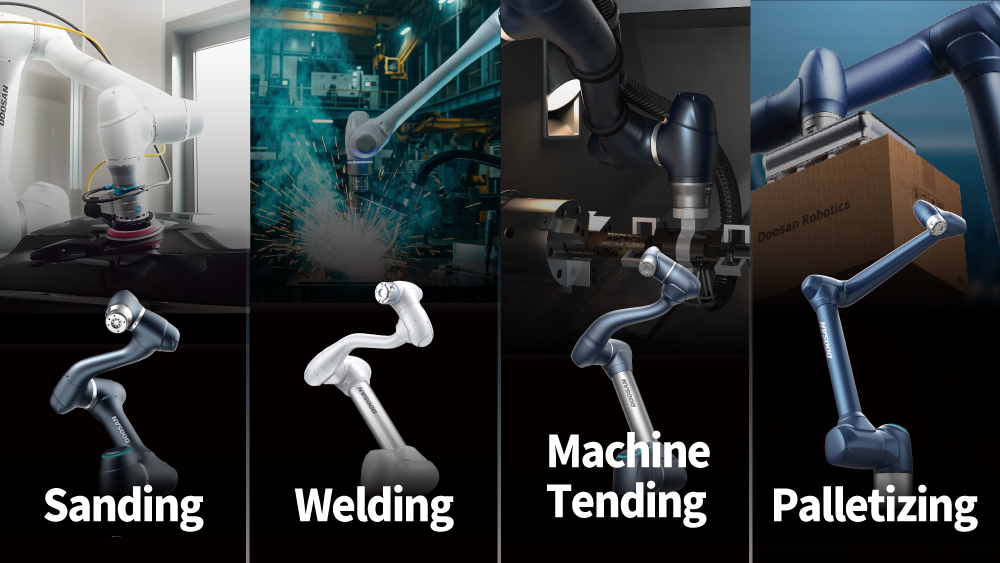
It is difficult to group cobots into distinct types without associating them with specific processes and the environments they fit. We suggest comparing cobots against desired robotics application, such as:
- Material handling cobots
- Machine tending cobots
- Welding cobots
- Inspection and assembly cobots
- Palletizing cobots
- Food and beverage cobots
An application-first view is useful because your process usually drives the decision. Engineers and system designers should discuss payload, reach, and interfacing with collaborative robot manufacturers directly to customize the cobot for your line. Our post Optimizing Just-in-Time Manufacturing With Collaborative Robotics offers more insight into cobot integration.
What Benefits Do You See in Human Robot Collaboration?
The biggest benefits of human-robot collaboration are steadier output, lower physical strain, and better use of skilled labor. People keep the judgment-based work, while the robot handles the motion that must stay repeatable. The most noteworthy benefits include:
- More consistent cycle times
- Lower strain on workers
- Easier redeployment across tasks
- Faster automation ramp-up
- Better support for mixed workflows
These benefits are strongest when your process changes often or labor is tight. Our explainer, What Is Robotics Automation in Factories?, will help connect cobot use cases to the bigger automation picture.
Where Should You Go Next?
You should start by matching the cobot to the job, not by starting with a spec sheet. Start by exploring this website in more detail. You will find application solutions, robot series data, and use case discussions of cobot setups in real production processes. To move forward from there, take a moment to visit our product & solution inquiry page and allow us to help you map automated robotics into your existing production pipeline.
