

What Are Robotic Arms in Manufacturing?
2026. 03. 23
Collaborative robots from the advanced Doosan robotic arm lineup are built to perform repetitive tasks with high precision. Manufacturing arms use a variety of integrated components and include safety features to allow performance near human collaborators.
But what will they do for you, and how do they differ from your existing CNC machines? Let's take a closer look at what a robotic arm is and what it can do, then examine robotic automation in conjunction with CNC devices.
How Does a Manufacturing Robot Arm Work?
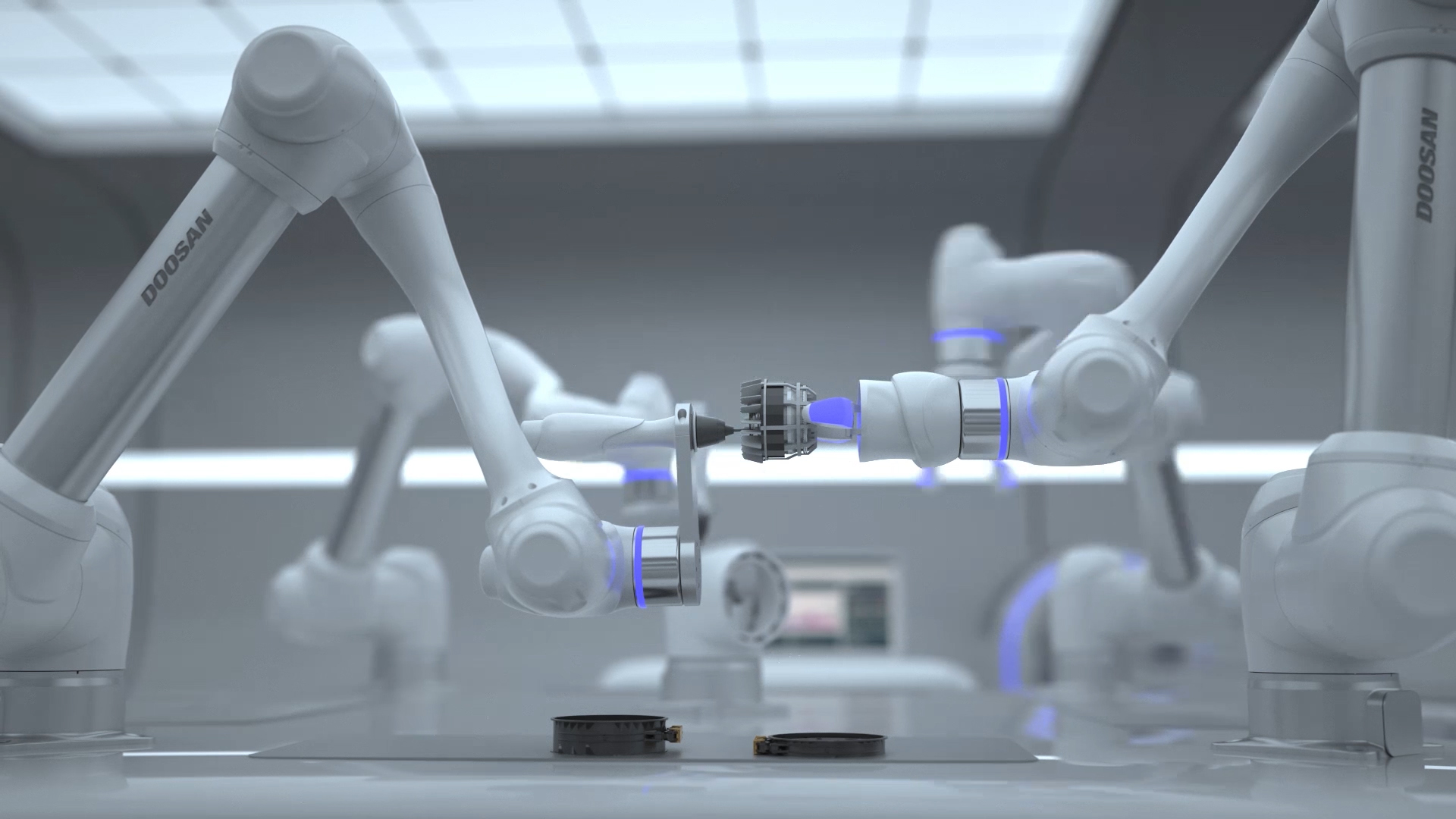
Robotic manufacturing integrates a programmable mechanical arm to repeat tasks with precision, speed, and consistency. You define positions and paths, set speeds and payloads, and then the robot arm executes the sequence.
The composition of a manufacturing robot arm includes many precision parts. Proprietary safety procedures allow flexible deployment in closer proximity to people. Some of the components include:
· Controller – Handles programs, coordination, and safety.
· Sensors – Torque, force, or vision input for performance and safety.
· Drives and motors – Power joints to control speed and torque.
· Joints and axes – Rotating or sliding joints for complex movement.
· End-of-arm tooling (EOAT) – The working tool for the operation.
All components are designed to work in tandem, often moving in ways that would be impossible for human arms to reproduce. The result is a system that complements the human factor by increasing speed, accuracy, and safety. From
assembly to material handling, robotic manufacturing is a great fit for factories of all types.
For example, collaborative robots from Doosan Robotics incorporate force-sensing technology and high-torque sensors that detect even small impacts and stop movement immediately, allowing robots to safely operate alongside human workers in shared production environments.
What Is a Robotic Arm Used for in Factories?
A robotic arm is used in factories wherever you have repetitive, precise, or ergonomically challenging tasks. From simple stacking and material handling to precision tasks, robotic automation is tailored to each process.
Typical applications include:
· Material handling and transfer
· Robotic palletizing systems
· Pick-and-place operations
· Machine tending (CNC, injection molding, presses)
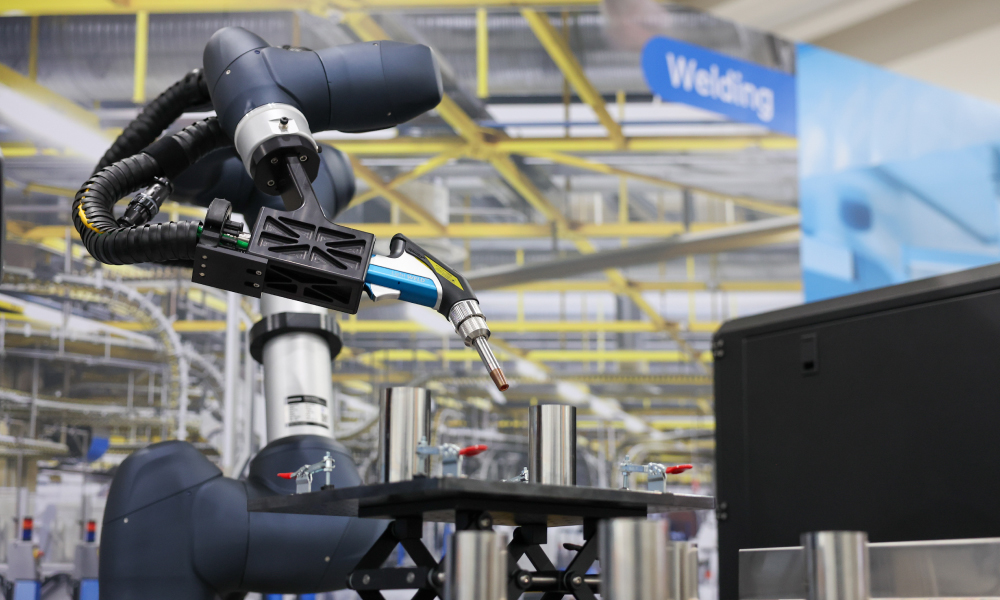
· Welding support and torch handling
· Packaging and case packing
· Assembly and screwdriving
· Inspection and quality checks
· Surface finishing, sanding, or polishing
You can use robotics material handling cells to move heavy parts from one station to another, reducing manual lifting and injury risk. A robotic palletizing system can stack pallets consistently, even with product mix changes. In welding, a robot arm will improve bead quality and reduce rework. Flexibility is a driving force behind manufacturers investing in turnkey solutions.
Many collaborative robot systems are designed specifically for these types of manufacturing tasks. For example, Doosan Robotics provides automation solutions for manufacturing processes such as machine tending, palletizing, packaging, assembly, and inspection across multiple manufacturing industries.
What Is the Main Purpose of a Robotic Arm?
The main purpose of a robotic arm is to help you execute tasks in a more consistent, efficient, and safe way than manual labor alone. For more information, download our robotics catalog for specifications, options, and configuration details. Common benefits include:
· Higher throughput – Faster, repeatable cycles with less downtime.
· Better quality and consistency – Identical motion, angle, and force every time.
· Improved safety and ergonomics – Robots take on heavy, hot, dirty, or hazardous jobs.
· Scalability and flexibility – Adjust programs for new products or volumes without rebuilding the entire line.
· More predictable operations – Robots don’t get tired, distracted, or injured, allowing reliable planning and scheduling.
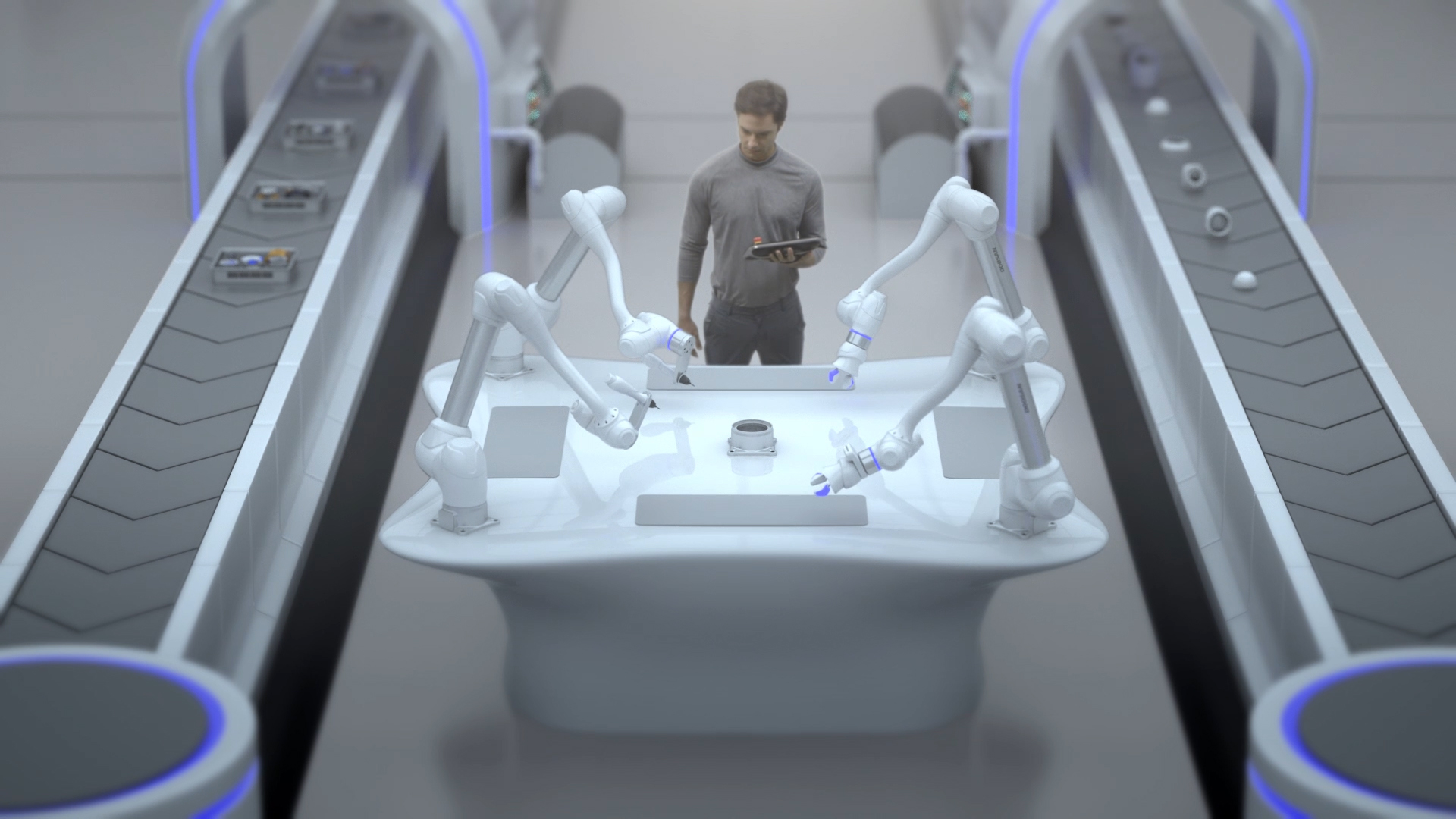
State-of-the-art tools are crucial for top-level production lines that perform flawlessly, faster and more safely than manual labor. They serve as an enhancement to manual systems, working safely alongside your human staff.
These types of systems are already being deployed in large-scale manufacturing environments. For example, Doosan Robotics recently entered a partnership to supply more than 100 robotic manufacturing systems to automotive components supplier Kwangjin Group, where robots are used for assembly, riveting, and inspection processes on production lines.
For more details on automation robots in automation, check out our post, How Automation Robots Are Changing the Way We Work.
What Is the Difference Between CNC and Robotic Arm for Manufacturing?
Both CNC machines and robotic arms are forms of automation, offering integrated solutions in your factory. A robotic manufacturing arm works alongside CNC deployments to increase productivity and reduce waste.
CNC machines provide:
· Rigid, high-precision machining.
· Dedicated equipment for a specific manufacturing process.
Robotic arms provide:
· Flexible multi-process automation.
· Configurable cells are updated for new SKUs or packaging formats.
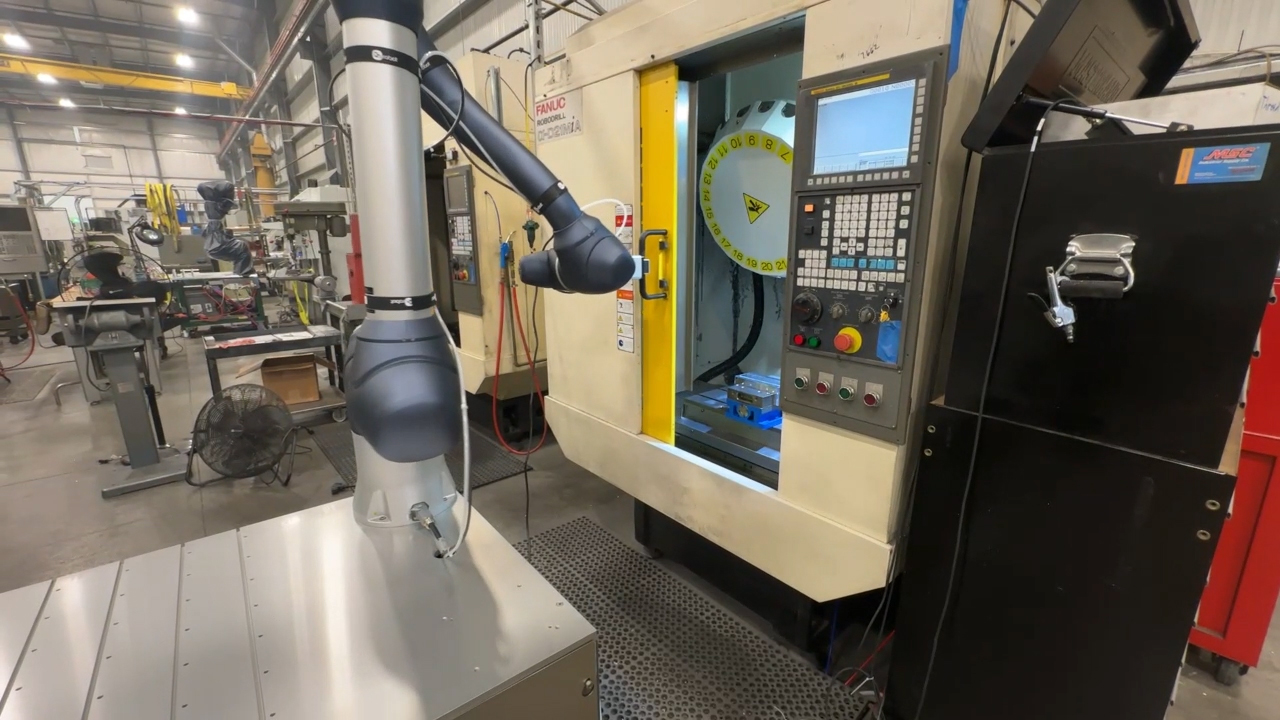
A robotic arm for manufacturing can tend multiple CNC machines, moving raw parts in and finished parts out, while the CNC handles cutting or other procedures. to automate CNC loading and unloading while improving productivity and machine utilization. The result is faster, more accurate work, repositioning human involvement as a managing or supporting role.
Automate with Robotic Arms Today
Industry analysts like the International Federation of Robotics (IFR) and McKinsey consistently highlight this combination of flexible robotics and high-precision equipment as a key to productivity gains in modern factories.
By starting with a clear understanding of how robotic process automation technologies add value, you’ll be better prepared to choose the right solution, deploy it faster, and realize the benefits of automation across your plant. Contact a Doosan representative todayto discuss the right automation roadmap for you.
