

[Success Story] Robot Automation at a Global Top-Tier Parts Manufacturer
2026. 10. 02
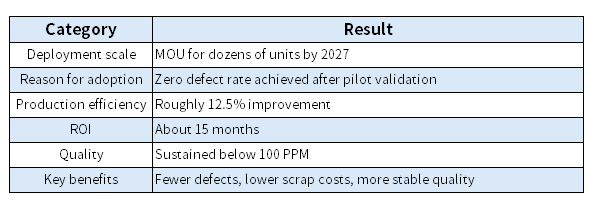
Automotive parts manufacturers face two challenges at once: a shrinking labor pool and the need for consistent quality. Collaborative robots (cobots) are increasingly being used in automotive manufacturing to automate repetitive assembly processes while maintaining consistent positioning, pressure, and cycle times. Global Top-Tier Manufacturer A, an automotive parts manufacturer, turned to collaborative robot automation to address these challenges. After validating the technology on a live mass-production line, the company decided to deploy dozens of Doosan Robotics cobots across its domestic and overseas affiliates by 2027 — one of the largest single cobot supply contracts in Korea to date. So what convinced Manufacturer A to make an investment that big?
Why Manufacturer A Needed Automotive Manufacturing Automation
The first challenge Manufacturer A needed to address was quality consistency. On the assembly line, module plates have to be positioned precisely, while pulleys and washers need to be inserted with a high level of accuracy. If a washer is inserted even slightly out of position, the entire product may need to be scrapped. Once a defect is identified, the production line may also require 100% inspection.
Running high-precision assembly processes throughout the day does more than place a burden on operators. Because the work is repetitive and skill levels can vary from person to person, maintaining consistent quality can become increasingly difficult. Manufacturer A therefore needed more than a robot that simply assisted operators. It is needed to automate repetitive processes that required precision and repeatability, helping maintain consistent quality throughout production.
Validating Collaborative Robot Automation on a Mass-Production Line
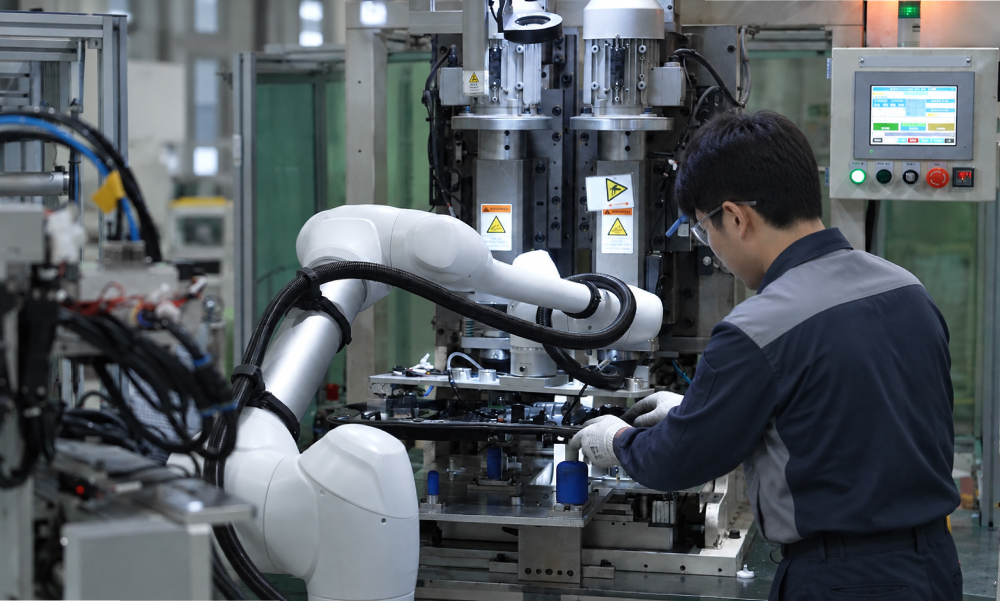
Rather than moving directly to a large-scale investment, Manufacturer A first conducted a pilot project with Doosan Robotics cobots on a live mass-production line. The goal was to validate whether collaborative robot automation could perform the required tasks consistently in a real manufacturing environment.
The cobots handled several key processes, including:
• Module plate pick and place
• Precision pulley alignment
• Precision washer insertion
• Consistent pressure control
• Repetitive transfer of finished products
• Movement to inspection positions
The pilot focused on one critical question:
Could the cobots maintain consistent positioning and pressure across repeated cycles while keeping product quality stable?
For Manufacturer A, the answer would determine whether cobot automation could move beyond a pilot project and become a scalable solution for automotive parts manufacturing.
The deciding factor behind choosing Doosan Robotics: Quality
The pilot results were clear. On the riveting process, defects dropped to just one or two. In the mass-production environment that followed, the defect rate held at effectively zero, and quality stayed reliably below 100 PPM. As quality stabilized, other benefits followed:
• Lower scrap costs
• Less 100% inspection
• Minimal quality variation tied to operator skill
• A more stable production process
That proven quality stability and return on investment from the pilot is the single biggest reason Manufacturer A committed to a dozen of unit roll-out.
Automation improved productivity, too
The gains weren't limited to quality. Running thousands of repetitive cycles a day at the same speed and the same quality, the cobots reduced dependence on individual operators and lifted overall production efficiency by roughly 12.5%. The payback period (ROI) came in at about 15 months, which made the economics of expanding automation work as well. With robots taking on the repetitive work, operators can focus on higher-value tasks — improving how the workforce is deployed at the same time.
Not just supplying robots, designing the automation together
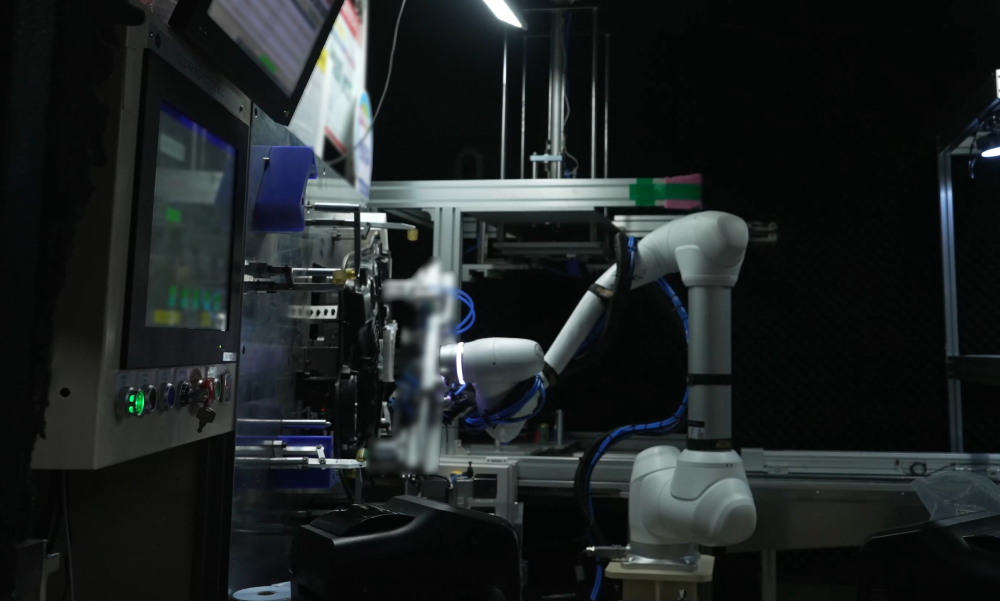
Manufacturer A wasn't only evaluating robot performance. Even after the pilot, Doosan Robotics' sales and technical support teams stayed engaged with the production floor to keep operations running smoothly. That support included:
• A domestic service and support network
• Fast technical response
• A dedicated engineer
• A two-year warranty
Going forward, the two companies plan to jointly develop customized automation solutions for Manufacturer A's other parts manufacturing processes, expanding the scope of the partnership.
Cobot adoption succeeds when validation leads to investment
Manufacturer A 's experience shows that adopting collaborative robots is more than a capital purchase of automation equipment. The key is the sequence: validate quality and productivity through a pilot, confirm defect reduction and return on investment on the actual floor, and only then scale up.Doosan Robotics will continue to help customers improve productivity and competitiveness with collaborative robot solutions that solve repetitive work and quality control challenges on the factory floor.
FAQ
Q. What kinds of tasks do collaborative robots perform in manufacturing automotive parts?
Tasks that demand repeatability and precision - module plate pick and place, pulley alignment, precision washer insertion, transferring finished products, and moving parts to inspection positions.
Q. How much can quality improve after deploying collaborative robots?
In manufacturer A 's case, defects on the riveting process fell from 12 pieces to one or two, and the mass-production line held its defect rate at effectively zero.
Q. What kind of payback period (ROI) can you expect on a cobot investment?
Manufacturer A saw a payback period of roughly 15 months, along with about a 12.5% gain in production efficiency.
Q. Why did the roll-out expand to dozens of units after the pilot?
Because quality stability and cost effectiveness were both proven in a live mass-production environment. The results confirmed in the pilot led directly to the large-scale investment decision.
Q. Why did Manufacturer A choose Doosan Robotics?
The decision weighed more than cobot performance alone — it also took into account the domestic service network, fast technical response, dedicated engineering support, and the two-year warranty.
