

Automated Factory Robots: Where to Start
2026. 10. 13
The best first automation project is usually not the most impressive one. It is the task with a clear operational problem, stable inputs, and measurable value. Automated factory robots can help manufacturers improve throughput, consistency, ergonomics, and labor utilization when the application fits the process.
If your team knows automation is necessary but has not chosen the first project, start with the work itself. Look for repetition, labor strain, bottlenecks, quality variation, and stable tasks. Then evaluate the business case before selecting a robotic solution.
What Are Automated Factory Robots?
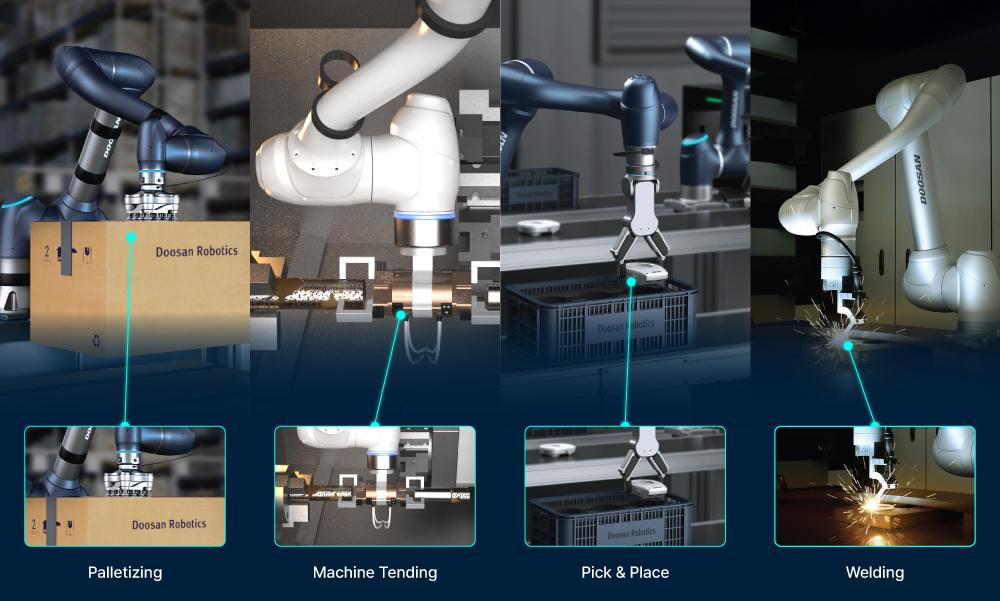
Automated factory robots are programmable robotic systems used to perform production tasks such as moving parts, tending equipment, welding, palletizing, packaging, and material handling.
For manufacturers exploring collaborative automation, these systems can provide a flexible way to automate repetitive processes while adapting to changing production needs.
The robot is only one part of the automation system. Tooling, sensors, controls, fixtures, software, and machine communication may also be required depending on the application. That is why process assessment should come before
robot selection. Doosan Robotics applications cover assembly, handling, finishing, packaging, and other production processes.
How Do Manufacturers Choose Where to Start with Automation?
A useful first factory automation project has a problem you can measure before and after implementation. Evaluate each candidate process using these questions:
1. Is the task highly repetitive?
2. Does it create frequent lifting, awkward motion, or fatigue?
3. Is it a throughput bottleneck?
4. Could automating the task reduce physically demanding or repetitive manual work?
5. Does quality vary because of repetitive manual execution?
6. Are the parts, positions, and sequence reasonably stable?
7. Can you calculate the financial value of improving the process?
Avoid automating a poorly understood process simply because robotic technology is available. If parts arrive unpredictably or upstream equipment is unreliable, stabilize the workflow first.
What Is the Best First Robotics Application for a Manufacturer?
There is no universal first application, but several tasks make strong
entry points because their problems and outcomes are easy to define.
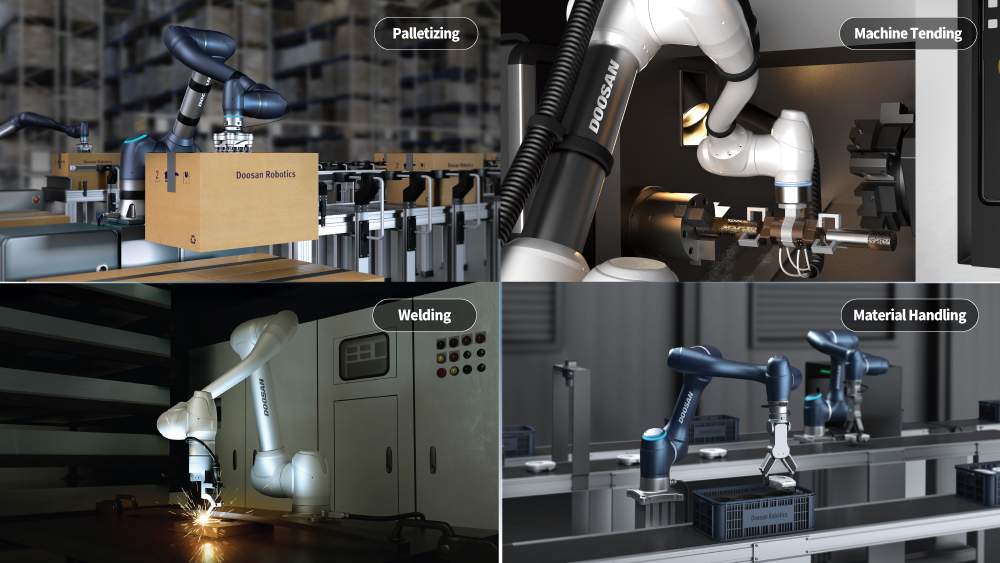
Palletizing
Palletizing is a common starting point when employees repeatedly lift finished cases from a conveyor and stack them onto pallets. A robotic system can create repeatable patterns and reduce repetitive lifting.
Machine Tending
Machine tending can automate loading and unloading CNC machines, presses, molding equipment, and other machinery. It is worth evaluating when skilled employees spend too much time transferring parts.
Welding
Welding automation can make sense when weld paths are repeatable, fixturing is consistent, and production volume supports the investment. It is one of several applications used across metalworking operations.
Material Handling
Material handling can include pick and place, loading, unloading, sorting, packaging, and repetitive transfers between predictable locations.
Which Factory Tasks Are Easiest to Automate with Cobots?
Cobots can be a practical entry point when a task requires moderate payload, repeatable motion, flexibility, and operator interaction. Their compact footprint can also make them well suited to manufacturing environments
where floor space is limited.
Cobots are particularly useful for applications that benefit from flexibility, moderate payload, repeatable motion, efficient use of space, and the ability to adapt as production needs change. This makes them a practical
option for manufacturers looking to introduce automation without overcomplicating the production environment.
How Can You Score a Potential First Project?
Give each statement 0 points for no, 1 point for partly, and 2 points for yes:
1. The task is repetitive.
2. The process runs frequently enough to justify investment.
3. Labor availability or fatigue is a recurring problem.
4. Improving the task would increase throughput.
5. Quality or consistency could improve.
6. Product presentation is predictable.
7. The process can be measured with clear KPIs.
8. The surrounding equipment is reliable.
9. The task could improve ergonomics or reduce repetitive manual work.
10. The application has a realistic ROI path.
A higher score means the process deserves closer engineering and financial review. It does not guarantee that automation is the right solution.
When Is Turnkey Automation Support Useful?
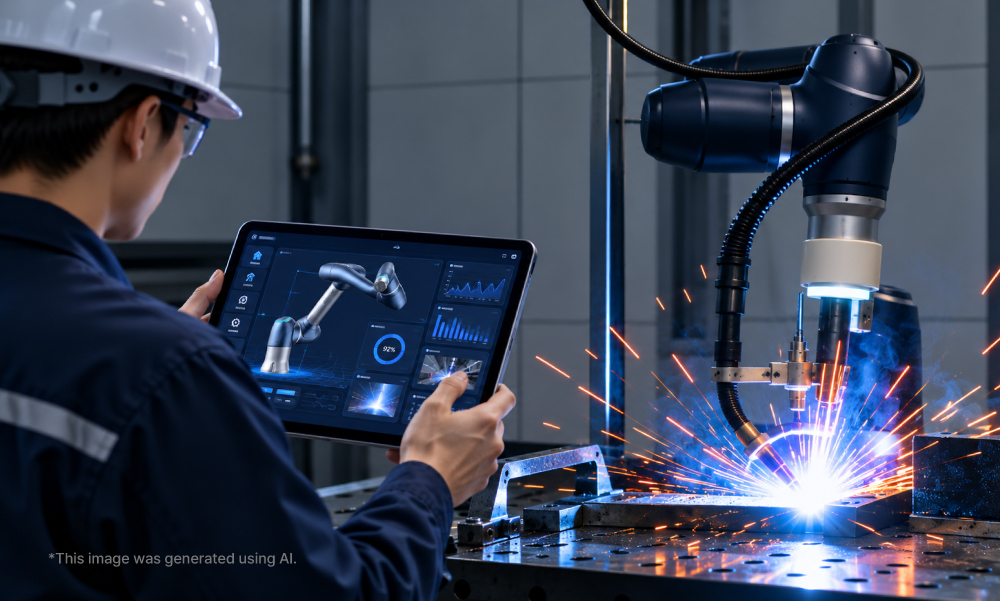
Turnkey support becomes valuable when a project requires more than the robot itself. A complete cell may need tooling, conveyors, vision, controls, safety equipment, software, programming, and training.
Doosan Robotics turnkey solutions cover applications including palletizing, machine tending, and welding. This can help when multiple components must work together as one system.
Before contacting an automation provider, document cycle time, product sizes and weights, production volume, floor space, workflow requirements, and target ROI.
Automated factory robots deliver the most value when they solve a defined production problem rather than becoming a technology project without a measurable objective. Start with a stable, repetitive process, establish the
operational and financial goals, and then select the collaborative automation approach that best fits the work.
Contact us today to discuss your production challenges, candidate applications, throughput requirements, workflow goals, and ROI objectives, and identify a practical first automation project.
