

What Is a Robotic Palletizing System?
2026. 06. 08
A robotic palletizing system is an automated solution that uses a robotic arm to stack products onto pallets in a planned pattern for shipping, storage, or warehouse movement. For manufacturers exploring automation, palletizing is often one of the most practical applications to understand first because it addresses repetitive lifting, stacking, and material handling work.
Collaborative robots help reduce manual strain while improving speed and consistency. Instead of relying completely on workers to move boxes, bags, or containers, a robot palletizing system places products onto pallets using programmed movement and repeatable positioning.
Global warehouse automation continues to expand quickly. Worldwide warehouse robotics spending is expected to keep growing as companies look for faster material flow and improved labor efficiency.
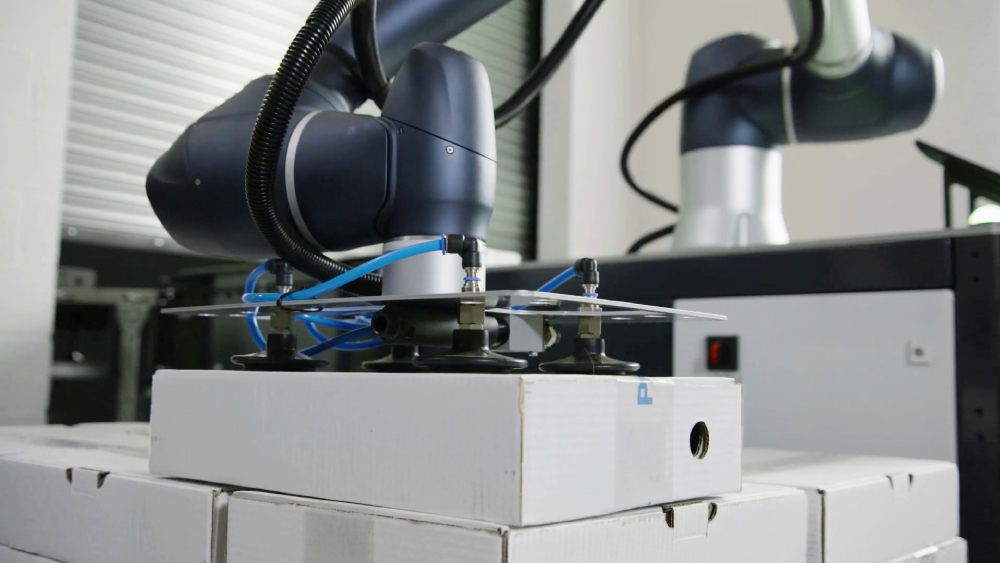
What is Palletizing?
Palletizing is the process of stacking products onto pallets in an organized pattern for storage or shipping.
A palletizing application typically moves products from a conveyor or workstation onto a pallet using repeatable placement patterns. This helps improve shipping stability while reducing manual lifting for operators.
Collaborative palletizing systems are commonly used for boxes, cartons, bags, food products, packaged goods, and manufacturing components that need consistent stacking.
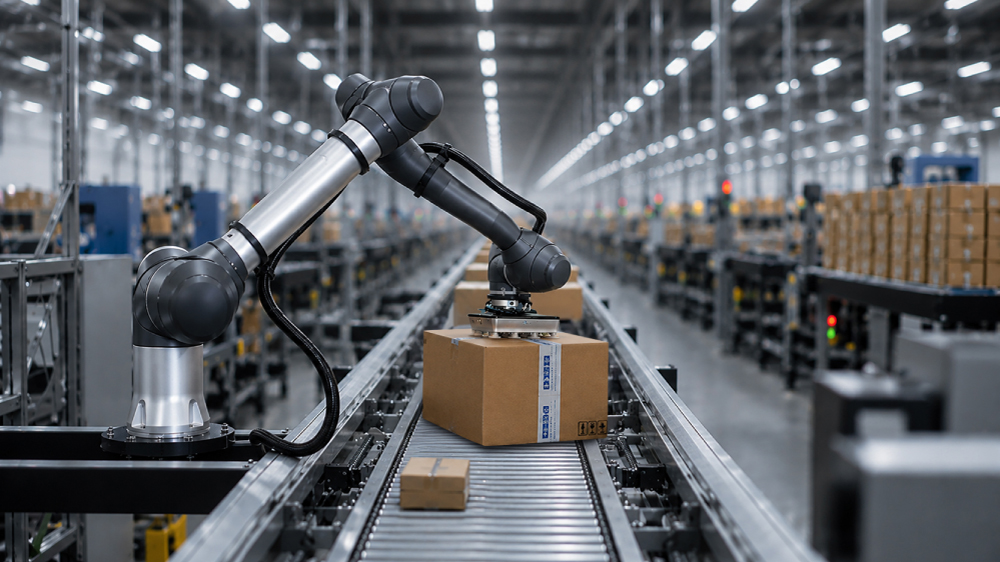
How Does a Robotic Palletizing System Work?
A robotic palletizing system works by picking products and placing them onto pallets using programmed movement and automated positioning.
The system typically follows a repeatable sequence: it detects or receives a product at a conveyor or workstation, grips the item with end-of-arm tooling, moves it to the pallet, and places it according to a programmed stacking pattern. Once one layer is complete, the robot continues building the pallet based on the required load configuration.
Typical system components include:
- collaborative robot arm
- end-of-arm gripper
- conveyor or transfer system
- pallet station
- safety sensors
- programming software
These components work together to support consistent movement and stable stacking performance.
Facilities that want faster deployment often benefit from palletizing solutions that simplify setup and help teams move quickly from planning into operation.
Where Are Pallet Robot Systems Used?
Pallet robot systems support many production environments where repetitive lifting slows production or creates ergonomic strain.
Common applications include:
- warehouse shipping operations
- food and beverage packaging
- manufacturing assembly lines
- logistics distribution centers
- packaging and box handling
- end-of-line stacking
These applications are common in end-of-line packaging environments where products need to be prepared for shipment quickly and consistently. For example, a robot palletizing system may stack sealed cartons from a conveyor,
palletize bags of ingredients in food production, or organize packaged goods before they move into storage or distribution.
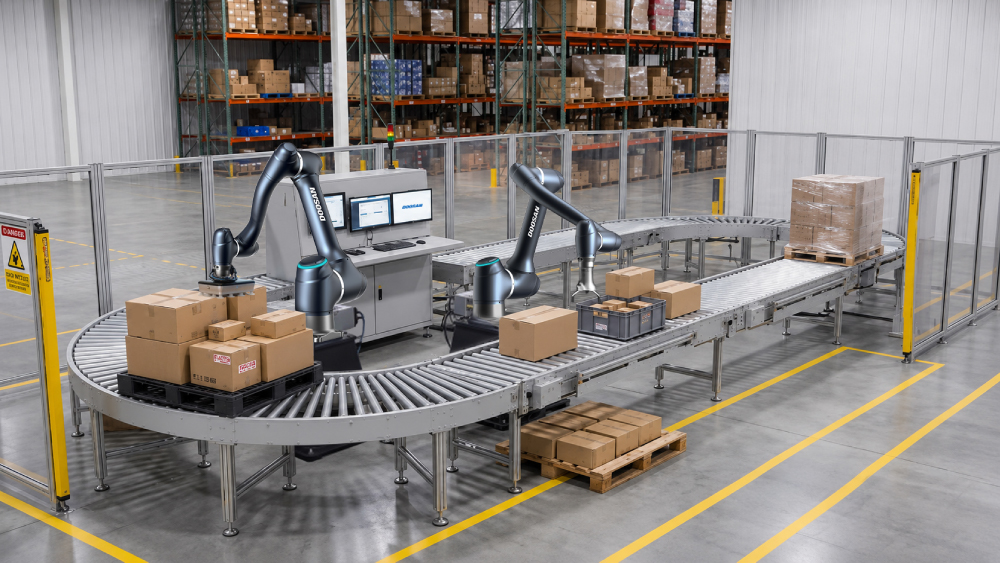
What Are the Key Benefits of Robotic Palletizing Systems?
The biggest benefit of a robotic palletizing system is repeatability.
A collaborative robot performs the same lifting and stacking movements consistently throughout each shift. This helps improve pallet quality while reducing operator fatigue.
Key benefits include:
- improved consistency
- reduced lifting strain
- faster throughput
- better workplace safety
- easier production scaling
These benefits make an automated palletizing system useful for facilities looking to improve workflow stability while reducing manual handling.
Production teams also expand automation into material handling workflows where collaborative robots move products between workstations with repeatable positioning.
How Much Does A Palletizing Machine Cost?
The cost of an automatic palletizer depends on payload requirements, gripper type, throughput goals, and integration complexity.
Simple collaborative palletizing systems may cost significantly less than large traditional automation cells because collaborative robots often require fewer facility changes. Facilities evaluating automation often compare system cost against labor savings, production speed, and injury reduction over time.
Collaborative systems also make scaling easier because automation can often expand gradually instead of requiring a full facility redesign.
Are Palletizers Easy to Install?
Collaborative palletizers are often easier to install than older caged automation systems.
Collaborative robots are designed to fit into existing workflows and can often be introduced without major floorplan changes.
Installation planning typically includes reviewing product flow, pallet patterns, available floor space, and programming needs so the system fits the operation as smoothly as possible.
When you see palletizing in action, you realize how repeatable stacking works in practical production environments.
What is an Automated Pallet Racking System?
An automated pallet racking system stores and retrieves palletized goods using automated movement and organized warehouse positioning.
These systems often work alongside palletizing solutions by helping products move from finished stacking into warehouse storage. Collaborative automation helps improve flow between production and shipping operations while
reducing manual handling.
For companies considering a broader warehouse automation strategy, it is also important to evaluate how palletizing, storage, retrieval, and material flow work together.
Why Robotic Palletizing Systems Continue Growing Across Manufacturing
A robotic palletizing system from Doosan Robotics helps improve consistency, reduce repetitive lifting, and support more predictable product flow across manufacturing and warehouse operations.
Contact us today to learn more about collaborative palletizing automation. We can help you find a solution that's right for your specific needs.
FAQs
What is the Difference Between Palletizing and Depalletizing?
- Palletizing is the stacking of products onto pallets for shipping or storage. Depalletizing removes products from pallets so they can enter production, packaging, or warehouse workflows.
Can a Robot Palletizing System Handle Different Product Sizes?
- Yes. Collaborative palletizing systems can often be programmed to handle different product dimensions and stacking patterns depending on production needs.
Are Automated Palletizing Systems Safe Around Workers?
- Collaborative pallet robots are designed to operate closer to people than traditional caged systems. Safety requirements still depend on payload and application setup.
How Fast Can a Robotic Palletizing System Be Installed?
- Installation time depends on layout complexity and throughput goals. Collaborative systems often reduce setup time because they fit more easily into existing workflows.
