

Robotics Material Handling Applications | Doosan Robotics
2026. 11. 10
Material handling is essential to manufacturing, warehousing, and distribution operations. Moving components between workstations, loading equipment, and preparing products for shipment are repetitive tasks that can consume valuable employee time. Robotics material handling solutions using collaborative robots offer businesses a practical way to automate these activities while improving workflow consistency.
Doosan Robotics is an expert manufacturer of collaborative robot arms, also known as cobots, designed to support a variety of material handling applications. By integrating these collaborative robots with appropriate tooling and equipment, you can automate selected processes while maintaining flexibility across your operations.
What Is Robotics Material Handling?
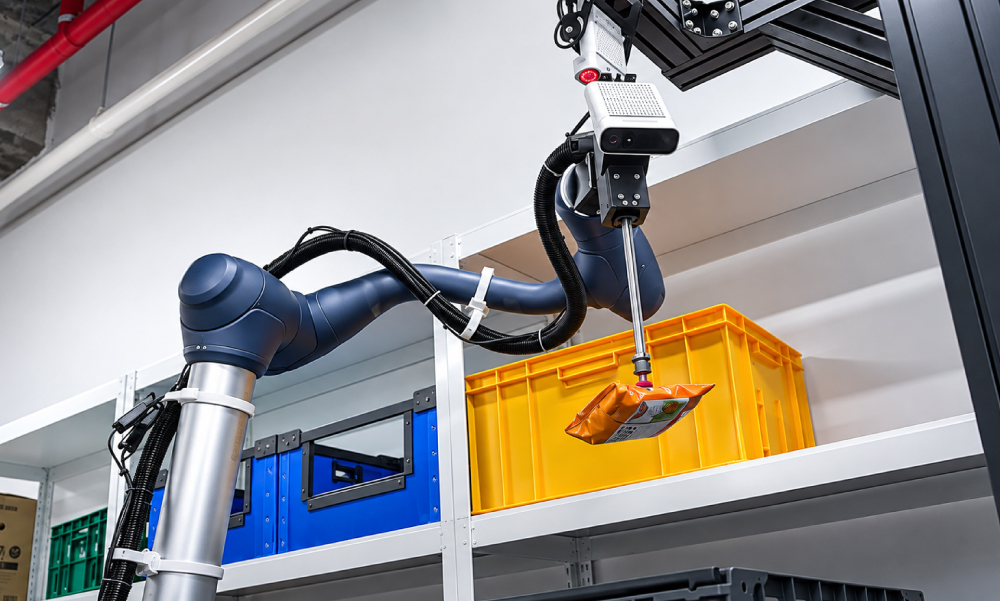
Robotics material handling involves using robotic technology to move, position, transfer, or organize materials and products within a facility.
Collaborative robot arms are particularly useful for repetitive handling tasks that require consistent movements and controlled positioning. Depending on the application, cobots can work with grippers, sensors, conveyors, and other equipment to perform automated handling operations.
Unlike a complete automation system, a collaborative robot arm provides the programmable movement needed to execute a task. Additional components, software, and integration may be necessary to create a functioning material handling solution.
Doosan Robotics manufactures advanced collaborative robot arms that can serve as the foundation for these applications. Our collaborative robot application solutions demonstrate how cobots can support different production requirements.
Common Material Handling Applications for Collaborative Robots
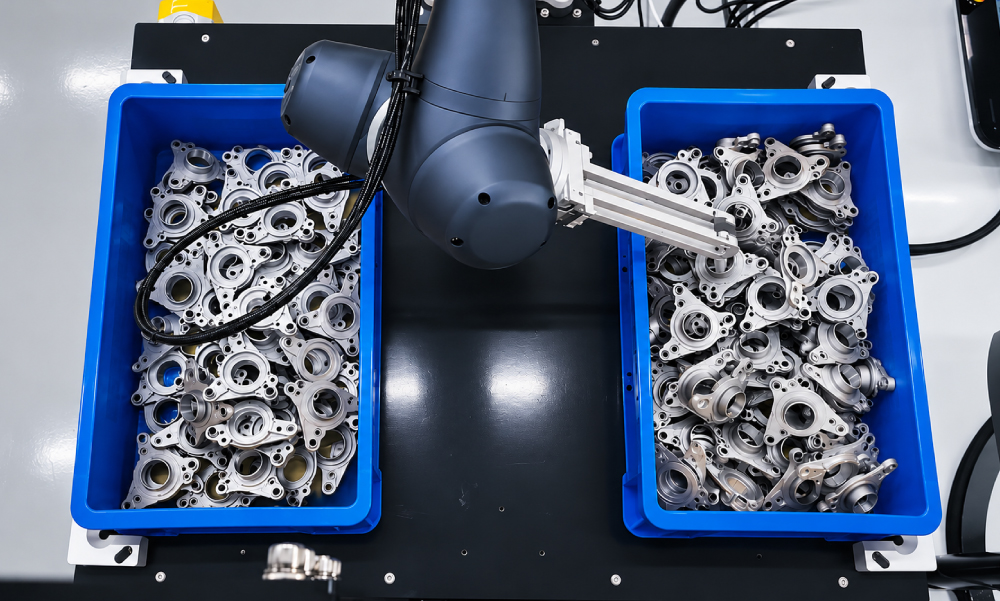
Collaborative robots can perform several material handling tasks across manufacturing and distribution environments. The most suitable applications typically involve repeatable movements, predictable product characteristics, and clearly defined handling requirements.
Pick-and-Place Operations
Pick-and-place is one of the most common collaborative robot applications. A cobot moves an item from one location to another, using an appropriate end effector to grip and release the product.
These operations can include transferring components between workstations, positioning items for assembly, or moving finished products into packaging equipment.
When combined with suitable sensors and controls, collaborative robot arms can support consistent product placement and reduce repetitive manual handling.
Machine Tending
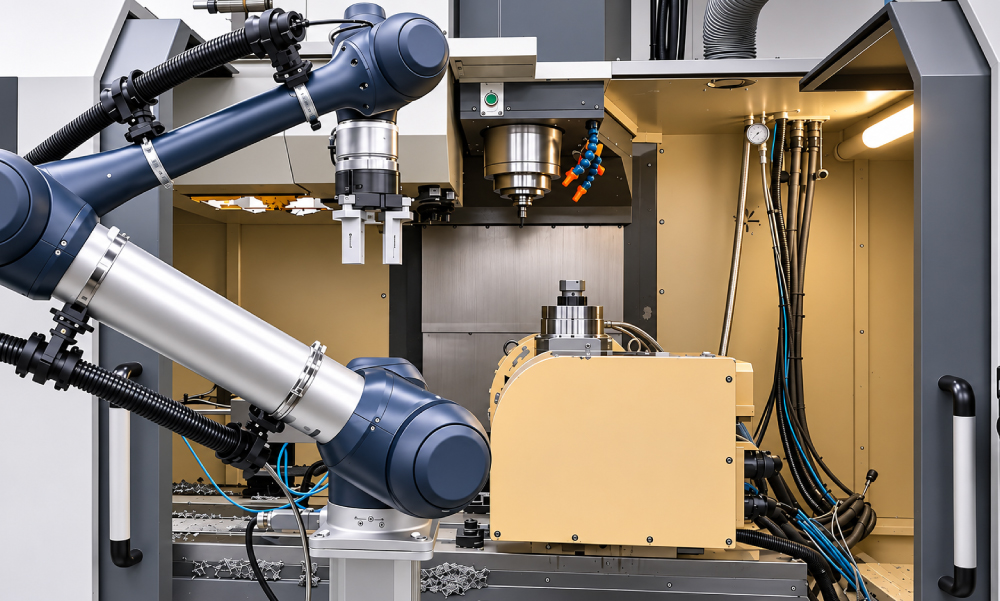
Machine tending involves loading raw materials or components into production equipment and removing them after processing.
Collaborative robot arms can support machine tending applications involving CNC equipment and other manufacturing machinery when properly configured and integrated.
A complete machine tending solution may require specialized grippers, fixtures, equipment communication interfaces, and safety measures.
By automating repetitive loading and unloading activities, you may improve equipment utilization and allow employees to focus on setup, quality inspection, and other responsibilities.
Packaging and Palletizing
Packaging and palletizing involve arranging products into containers, cartons, or organized loads for storage and transportation.
Collaborative robots can support these processes by transferring products into packaging positions or stacking suitable items according to programmed patterns.
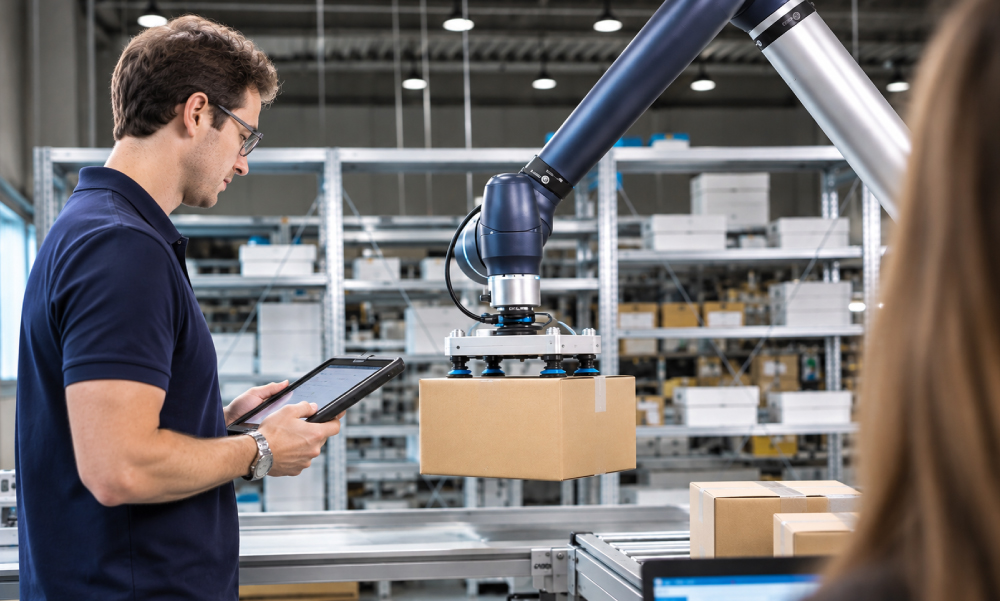
For example, a cobot packaging solution may combine a collaborative robot arm with a vacuum gripper, conveyor, and control system to move packaged products.
In these applications, collaborative robots can repeatedly pick products from a conveyor and place them into cartons or trays according to programmed patterns. For palletizing, cobots can stack packaged products onto pallets using predefined placement sequences, helping maintain consistent load arrangements while reducing repetitive manual lifting.
Doosan Robotics provides collaborative robot solutions for logistics that businesses can evaluate for packaging and material handling workflows.
Sorting and Product Transfer
Sorting operations require products to be directed toward designated locations based on defined criteria.
Collaborative robot arms can assist with these tasks when integrated with identification systems, sensors, and suitable handling equipment.
For example, a collaborative robot integrated with a vision system can identify products based on predefined characteristics, such as size, shape, or positioning. The robot can then pick up each item and transfer it to the appropriate conveyor, container, or workstation. This type of automation can support product sorting, quality inspection workflows, and organized material movement between production stages.
These solutions can help maintain consistent material flow while reducing repetitive employee involvement.
What Are the Benefits of Collaborative Robots for Material Handling?
The benefits of collaborative robot material handling depend on your production requirements, system configuration, and integration strategy.
Potential advantages include:
-
Improved productivity:
Automating repetitive transfers can help maintain consistent workflow activity and free employees for other tasks.
-
Greater repeatability:
Programmed movements support consistent product positioning and handling.
-
Reduced manual workload:
Cobots can take over selected repetitive movements that would otherwise require continuous employee attention.
-
Operational flexibility:
Collaborative robot arms can be reprogrammed or reconfigured when handling requirements change.
-
Efficient workspace utilization:
Depending on the application and required safeguards, collaborative robot solutions may fit within existing production layouts.
These benefits make collaborative automation an option worth evaluating when you want to improve specific material handling processes.
How Do You Integrate Collaborative Robots Into Material Handling Workflows?
Successful integration requires evaluating more than the collaborative robot arm itself. Your complete solution must account for the materials being handled, surrounding equipment, and operating conditions.
Consider the following steps:
-
Identify suitable tasks.
Evaluate repetitive handling activities, production bottlenecks, and opportunities to reduce manual transfers.
-
Assess application requirements.
Determine product weight, dimensions, gripping needs, reach, and required movement patterns.
-
Select appropriate equipment.
Choose a collaborative robot arm along with compatible grippers, fixtures, sensors, and supporting controls.
-
Plan system integration.
Evaluate conveyor connections, equipment communication, workspace layout, and software requirements.
-
Address safety and training.
Complete an application-specific risk assessment, implement appropriate safeguards, and train employees.
Collaborative robots are designed to support safe interaction between humans and robotic systems in shared workspaces. Proper installation, risk assessments, and appropriate safety measures help ensure a safe and productive working environment. The OSHA robotics overview offers additional guidance on robotic safety considerations and best practices.
Explore Material Handling Solutions from Doosan Robotics
Robotics material handling applications can help businesses improve repetitive product movement, maintain consistent workflows, and make better use of employee resources. From machine tending and pick-and-place operations to packaging and palletizing, collaborative robot arms provide a flexible foundation for appropriately engineered automation systems.
As a specialized manufacturer of collaborative robotic arm technology, Doosan Robotics offers expertise and solutions for businesses evaluating these applications. Explore our industry-specific collaborative robot solutions to understand how cobots can support your operational requirements.
Contact us today to discuss your material handling challenges and evaluate suitable collaborative robot arms.
