

Collaborative Robot Applications by Industry | Doosan Robotics
2026. 11. 24
Collaborative robots are helping businesses improve productivity, streamline repetitive processes, and introduce greater flexibility into their operations. From precision assembly in electronics manufacturing to packaging and material handling in logistics, collaborative robot applications continue to expand across industries.
As an expert manufacturer of advanced collaborative robot arms, Doosan Robotics develops cobots designed to support a wide range of production and handling tasks. These solutions allow businesses to automate selected processes while maintaining the flexibility needed to adapt to changing operational requirements.
Understanding how collaborative robots work across different industries can help you identify opportunities to improve efficiency within your own facilities.
What Are Collaborative Robots and What Tasks Can They Perform?
Collaborative robots, commonly called cobots, are robotic systems designed for applications that may involve working in shared environments with human employees, subject to appropriate risk assessments and safeguards.
Unlike fixed-purpose automation equipment, collaborative robot arms can be configured for different tasks using suitable end effectors, programming, and supporting equipment.
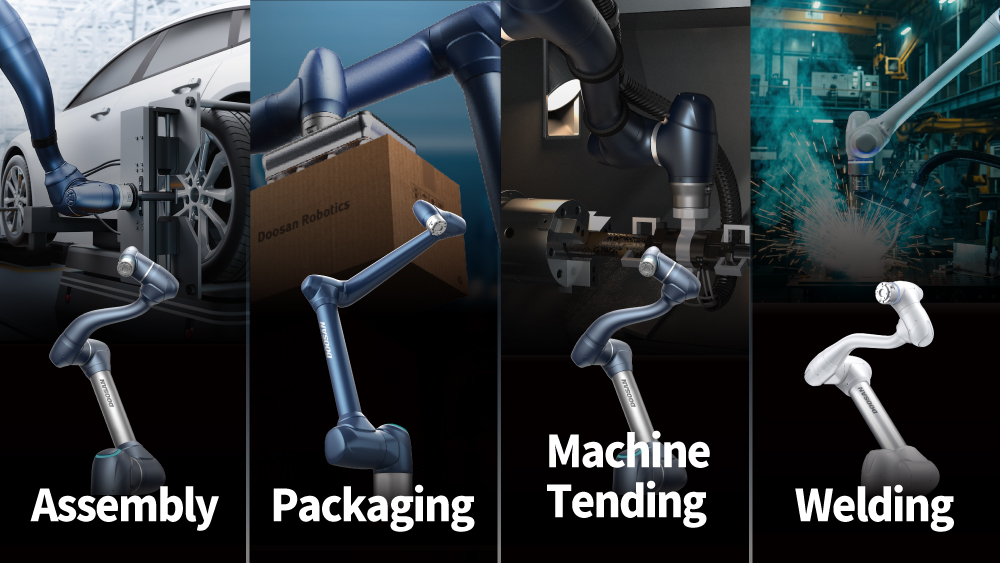
Common collaborative robot applications include:
- Assembly: Positioning, joining, and handling components during repetitive production processes.
- Packaging: Picking, placing, arranging, and preparing products for shipment.
- Material handling: Transferring components between workstations or production equipment.
- Machine tending: Loading and unloading equipment during manufacturing operations.
- Welding: Supporting repeatable welding operations with appropriately configured equipment.
Doosan Robotics manufactures collaborative robot arms that can be incorporated into these workflows. Its range of collaborative robot applications demonstrates how businesses can approach automation based on specific operational requirements.
What Industries Use Collaborative Robots?
Collaborative robots are used in electronics, semiconductor manufacturing, metalworking, logistics, food and beverage production, and other sectors requiring consistent, repeatable operations.
Doosan Robotics provides industry-specific collaborative robot solutions that address different production environments and workflow requirements.
Electronics and Semiconductor Manufacturing
Electronics and semiconductor production frequently involves small components, precise positioning, and repetitive handling processes.
An assembly cobot can support component placement, product assembly, and movement between production stages. Collaborative robot arms can also perform repeatable handling operations where consistent positioning is important.
Potential benefits include reduced manual handling, more consistent task execution, and improved workflow continuity.
Metalworking
Metalworking operations often involve repetitive machine loading, component movement, and welding tasks.
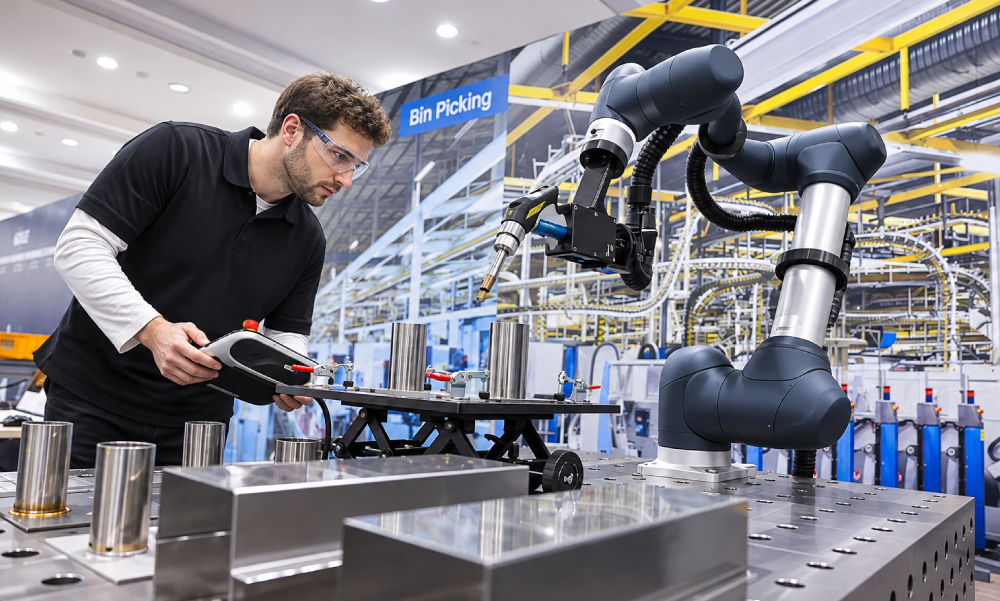
Welding cobots can follow programmed paths to support consistent weld placement when properly integrated with welding equipment. Collaborative robot arms can also load and unload machines, reposition workpieces, and transfer materials between processing stages.
These applications may help reduce repetitive manual work while allowing skilled employees to concentrate on setup, inspection, and more complex production activities.
Logistics and Warehousing
Logistics operations depend on efficiently moving, organizing, and preparing products for distribution.
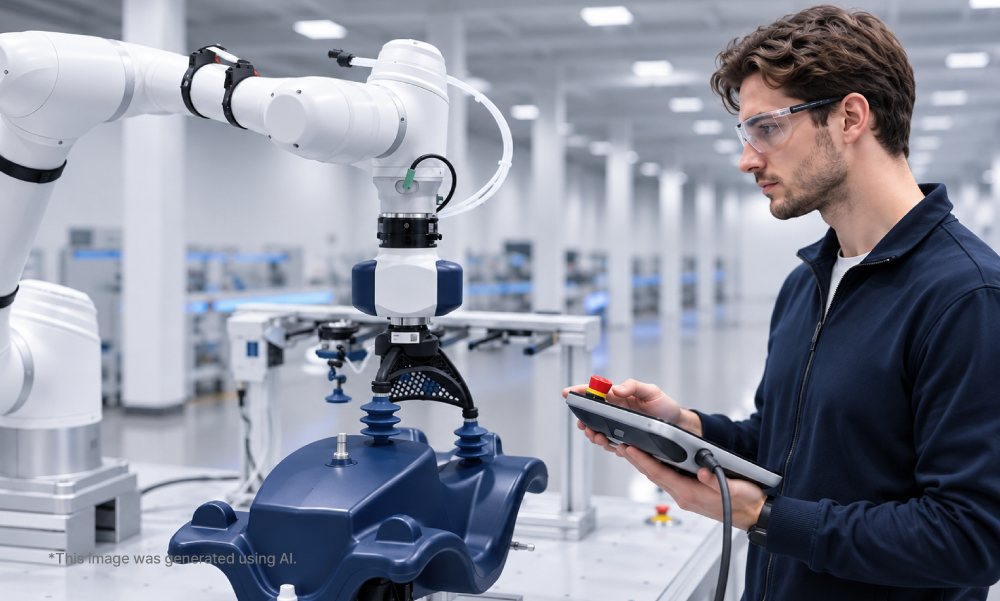
Collaborative robot arms can support pick-and-place operations, sorting, packaging, and palletizing. For example, a cobot solution equipped with an appropriate gripper can transfer products from a conveyor to designated packaging positions.
Cobot packaging applications can help businesses manage repetitive handling requirements while maintaining consistent product placement.
Food and Beverage
Food and beverage operations require repeatable handling processes, consistent packaging, and careful attention to hygiene requirements.
Collaborative robot arms can support product transfer, pick-and-place operations, and packaging tasks. Depending on the application, cobots may also assist with arranging packaged products for subsequent processing or distribution.
Appropriate equipment selection, hygienic design considerations, and cleaning procedures remain essential for food-related environments.
These are just a few of the industries and applications where collaborative robots can support greater efficiency and consistency. Explore Doosan Robotics’ full range of collaborative robot solutions to discover additional ways cobots can support different production processes and operational needs.
What Are the Benefits of Collaborative Robots Across Industries?
While collaborative robots can improve productivity and consistency across many operations, their value often depends on the specific challenges of each industry.
- Electronics and semiconductor manufacturing: Cobots can support precise component placement, repeatable assembly, and careful handling of small parts.
- Metalworking: Collaborative robots can assist with welding, machine tending, and repetitive component positioning, allowing skilled employees to focus on more complex operations.
- Logistics and warehousing: Cobots can support consistent sorting, packaging, and product movement to help maintain material flow.
- Food and beverage: Collaborative robots can assist with repetitive packaging and product handling when integrated with equipment suited to the facility's hygiene requirements.
Understanding these differences helps manufacturers identify where collaborative automation may provide the greatest operational value.
What Should Manufacturers Consider When Choosing Collaborative Robots for Their Industry?
Selecting a collaborative robot requires understanding the unique operating conditions, production requirements, and technical demands of your industry.
Key considerations include:
- Application-specific requirements: Determine whether the cobot will support precision assembly, welding, material handling, packaging, or another production task.
- Payload and reach: Evaluate the weight, dimensions, and positioning requirements of the components being handled.
- Production environment: Consider conditions such as workspace limitations, cleanliness requirements, and proximity to other equipment or employees.
- Equipment compatibility: Identify the grippers, tooling, sensors, and integration components necessary for the intended application.
- Safety and operational requirements: Conduct application-specific risk assessments and implement appropriate safeguards and employee training.
Regardless of industry, workplace safety remains an important consideration when implementing collaborative robots. Manufacturers should conduct application-specific risk assessments and implement appropriate safeguards based on their operational environment. For additional guidance, refer to OSHA's robotics safety materials.
For example, an electronics manufacturer may prioritize precise positioning and delicate component handling, while a metalworking facility may require cobot solutions compatible with welding equipment or machine-tending operations.
By evaluating these requirements, manufacturers can identify collaborative robot technology that aligns with their industry's specific operational needs.
Explore Collaborative Robot Solutions from Doosan Robotics
Collaborative robot applications offer practical opportunities to improve repetitive workflows across electronics, metalworking, logistics, food and beverage, and other industries. Selecting the right solution requires understanding your production objectives, operational constraints, and integration needs.
As a specialized manufacturer of advanced collaborative robot arms, Doosan Robotics provides technology and application expertise to help businesses explore these opportunities.
Contact us today to discuss your automation requirements and identify suitable collaborative robot solutions.
